October is one of the most important months for multifamily site preparation in St. Petersburg. The heat is finally beginning to ease, afternoon storms are typically less frequent than midsummer, and construction teams can often gain longer, more productive work windows. At the same time, October is still part of hurricane season in Florida, and local conditions like sandy soils, high groundwater, flood zones, and coastal drainage requirements must be taken seriously.
At BTB Development, we understand that successful multifamily construction starts long before the first slab is poured. A well-prepared site helps control costs, reduce delays, improve safety, and protect the long-term performance of the building. Whether you are planning apartments, townhomes, mixed-use housing, or infill multifamily development in St. Petersburg, the preparation phase sets the tone for the entire project.
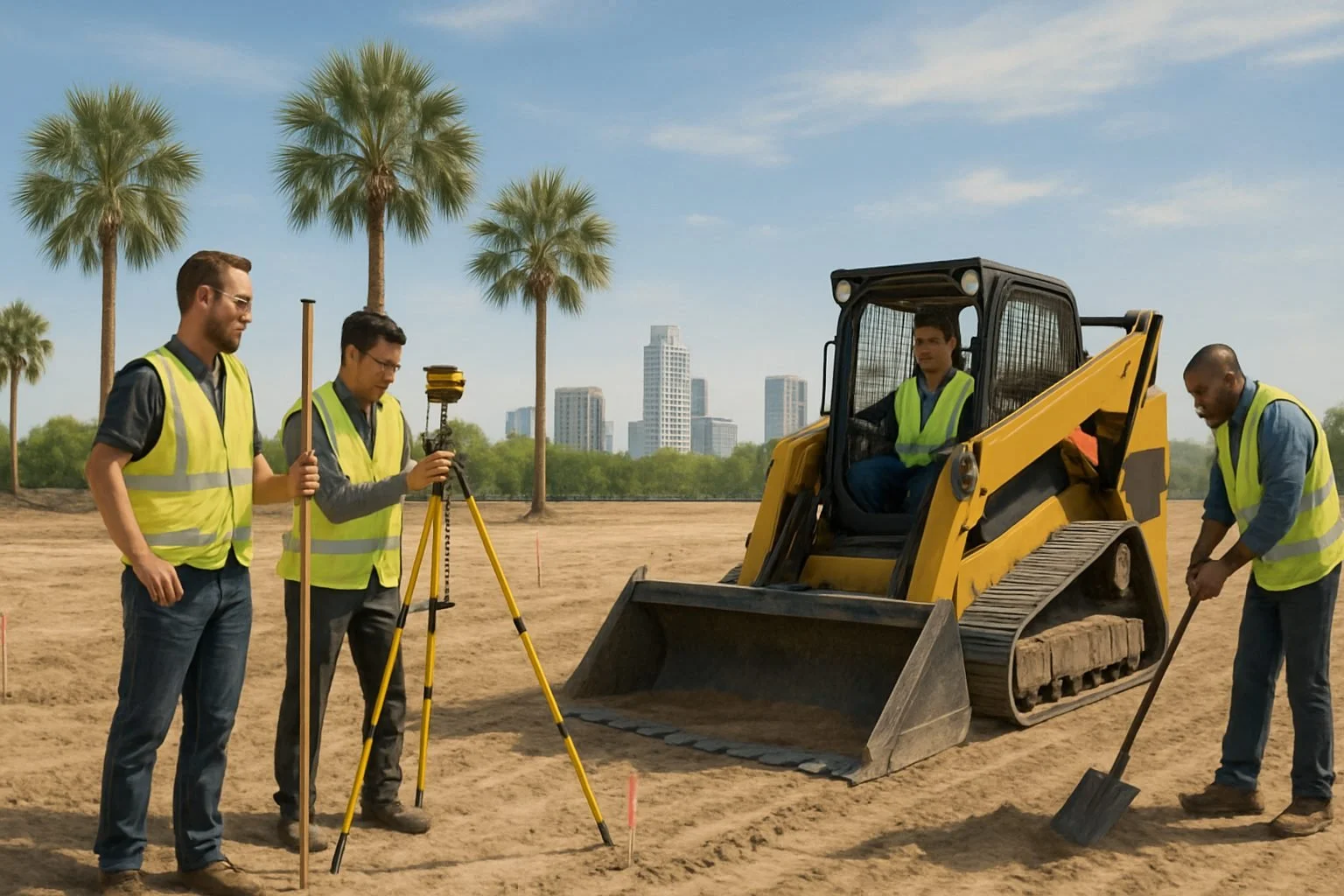
A professional construction crew in St. Petersburg, Florida preparing a cleared multifamily development site in October, with compact equipment, survey stakes, sandy soil, palm trees, blue sky with light clouds, and downtown St. Petersburg visible in the distance
Key Takeaways:
Start with site due diligence. Surveys, soil testing, flood zone review, and utility research help prevent expensive surprises later.
Plan around October conditions. St. Petersburg’s October weather offers better work windows, but hurricane readiness and drainage planning remain essential.
Prioritize drainage, grading, and erosion control. Multifamily sites must be built to manage stormwater safely and meet local requirements.
Choose a local development partner. BTB Development understands St. Petersburg’s permitting environment, coastal construction concerns, and site-specific challenges.
1. Site Evaluation and Due Diligence
Every successful multifamily project begins with a clear understanding of the property. In St. Petersburg, two sites only a few blocks apart can have very different soil conditions, elevation issues, flood exposure, utility access, and permitting requirements. Before equipment arrives, the development team should complete a thorough review of the land.
This early due diligence helps determine whether the site is truly suitable for the proposed density, parking layout, stormwater system, and building footprint. It also gives owners and investors a more accurate picture of cost and schedule.
Boundary and topographic surveys
Geotechnical soil testing and borings
Flood zone and elevation review
Environmental screening and tree assessment
Existing utility location and capacity review
Zoning, setbacks, access, and parking requirement analysis
In October, due diligence is especially valuable because we are still watching late-season tropical activity. A site that drains poorly after a heavy rain event may reveal issues that are not obvious during dry periods. At BTB Development, we pay attention to how water moves across a property before, during, and after storms.
2. Permitting and Local Coordination
Multifamily development in St. Petersburg requires careful coordination with local agencies, utility providers, engineers, surveyors, and inspectors. The site preparation phase must align with approved plans and local requirements for drainage, access, tree protection, erosion control, and right-of-way work.
Permitting is not just paperwork. It is a roadmap for how the site should be prepared safely and legally. Missing details during this stage can lead to stop-work orders, redesigns, or costly field changes.
“The biggest difference on our multifamily project was having a local team that knew what questions to ask before the work started. BTB Development helped us avoid delays by addressing site conditions early.”
— Multifamily Property Investor, Pinellas County
Because BTB Development is based in St. Petersburg, we understand the pace, expectations, and practical realities of building here. Local knowledge matters when coordinating site logistics, utility tie-ins, inspections, and weather-sensitive work.
3. Clearing, Demolition, and Site Access
Once approvals are in place, the physical transformation of the site begins. This may include removing old structures, clearing vegetation, hauling away debris, protecting trees that will remain, and establishing safe access routes for equipment and workers.
In many St. Petersburg neighborhoods, multifamily projects are built on infill lots surrounded by existing homes, businesses, alleys, and narrow streets. That means site access must be planned carefully. Deliveries, dumpsters, temporary fencing, and equipment movement need to be organized to reduce disruption and protect nearby properties.
Install construction fencing and safety signage
Create stabilized construction entrances
Coordinate demolition and debris removal
Protect neighboring structures, sidewalks, and roadways
Preserve approved trees and landscape buffers
Plan staging areas for materials and equipment
October’s slightly cooler mornings are helpful for labor productivity, but crews still need to prepare for sun exposure, sudden rain, and tropical weather alerts. A good site preparation plan includes weather monitoring and clear procedures for securing equipment and materials if storms approach.
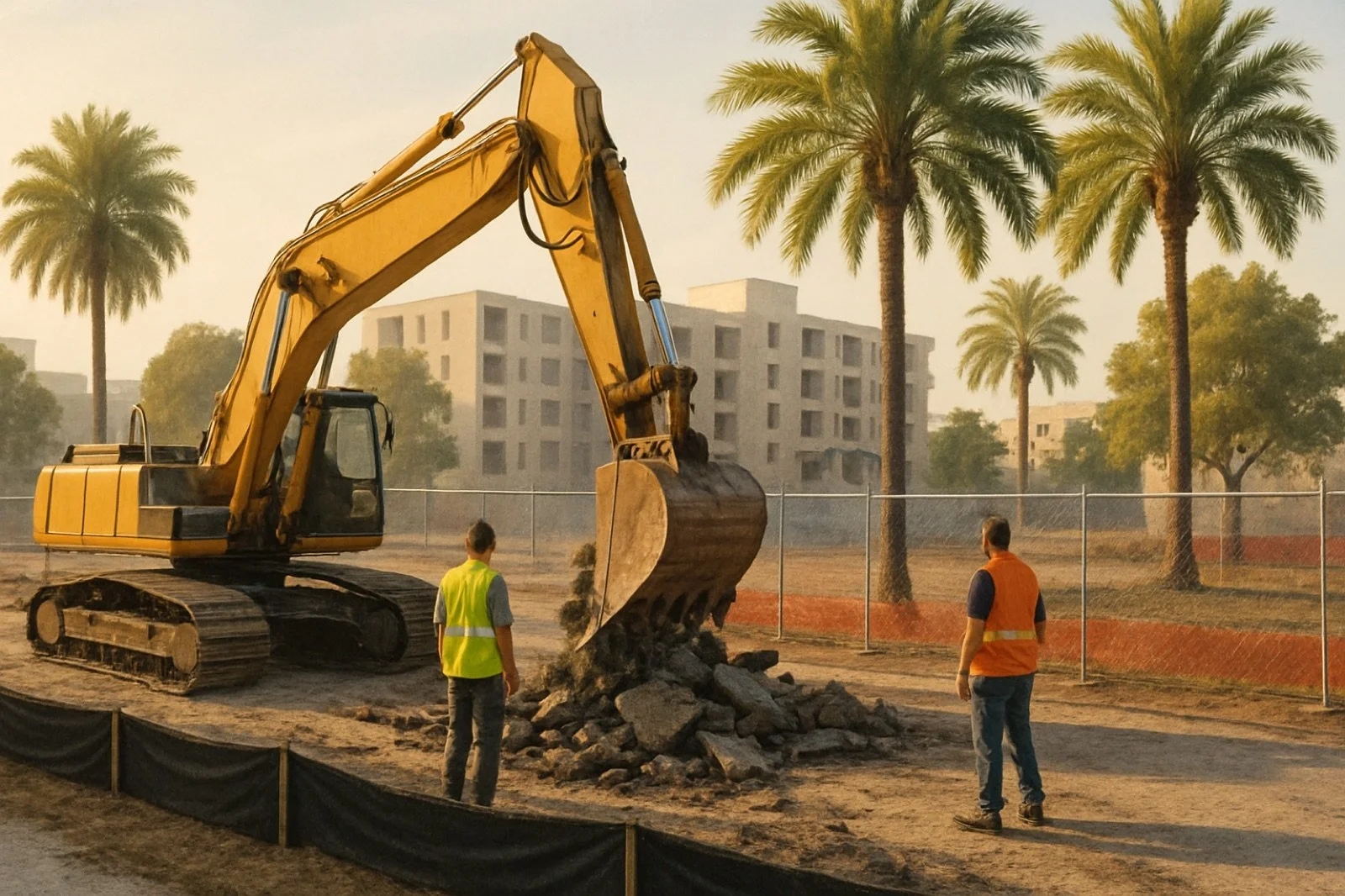
Demolition and clearing phase of an urban multifamily construction site in St. Petersburg, Florida, with an excavator removing old pavement, temporary fencing, erosion control barriers, nearby palm trees, and warm October morning sunlight
4. Grading, Drainage, and Stormwater Planning
Drainage is one of the most important parts of site preparation in St. Petersburg. Multifamily developments increase impervious surface area through buildings, parking areas, sidewalks, and drive aisles. Without proper grading and stormwater systems, water can pond on-site, impact neighboring properties, damage pavement, and create long-term maintenance problems.
October is a good time to evaluate site drainage because the ground may still reflect wet-season conditions. Even as the rainy season begins to taper, late storms can still bring heavy rainfall. Proper grading helps direct water to approved collection points, retention areas, underground systems, or municipal connections.
Key drainage preparation steps may include:
Rough grading the site to match engineered elevations
Installing silt fencing, inlet protection, and erosion controls
Preparing retention or detention areas
Coordinating storm drain installation
Managing runoff during active construction
Stabilizing exposed soils to reduce erosion
For multifamily projects, grading must also support accessibility requirements, parking lot slopes, pedestrian routes, building pads, and utility layouts. At BTB Development, we look at the full picture so drainage solutions work with the project—not against it.
5. Soil Stabilization and Compaction
St. Petersburg’s sandy soils can be workable, but they still require professional evaluation and proper preparation. Soil conditions affect foundations, pavement performance, underground utilities, and long-term settlement. That is why geotechnical testing and compaction verification are essential.
During site preparation, unsuitable soils may need to be removed and replaced. In other cases, the site may require moisture conditioning, fill placement, compaction, or stabilization before construction can move forward. Skipping this step can lead to cracked pavement, foundation issues, drainage problems, and expensive repairs.
October weather can be helpful here because lower humidity and fewer daily storms may allow soil work to proceed more efficiently. However, if a tropical system brings heavy rain, exposed soils can quickly become saturated. BTB Development plans soil work with weather windows in mind, reducing rework and protecting the construction schedule.
6. Utility Planning and Infrastructure Preparation
Multifamily developments place significant demand on utilities. Water, sewer, electric, gas, communications, fire service, and stormwater infrastructure all need to be planned before vertical construction begins. In established areas of St. Petersburg, existing utilities may be old, shallow, congested, or located in tight rights-of-way.
Site preparation often includes trenching, utility installation, coordination with service providers, and inspections before backfill. Proper sequencing matters. Installing utilities in the wrong order can create conflicts and delay paving, foundations, or landscaping.
For multifamily projects, utility planning should account for:
Domestic water and fire line requirements
Sanitary sewer capacity and connection points
Transformer and electrical service locations
Communication and internet infrastructure
Irrigation needs for landscaping
Future maintenance access
BTB Development works to identify utility conflicts early and coordinate with the right professionals so the site is ready for the next construction phase.
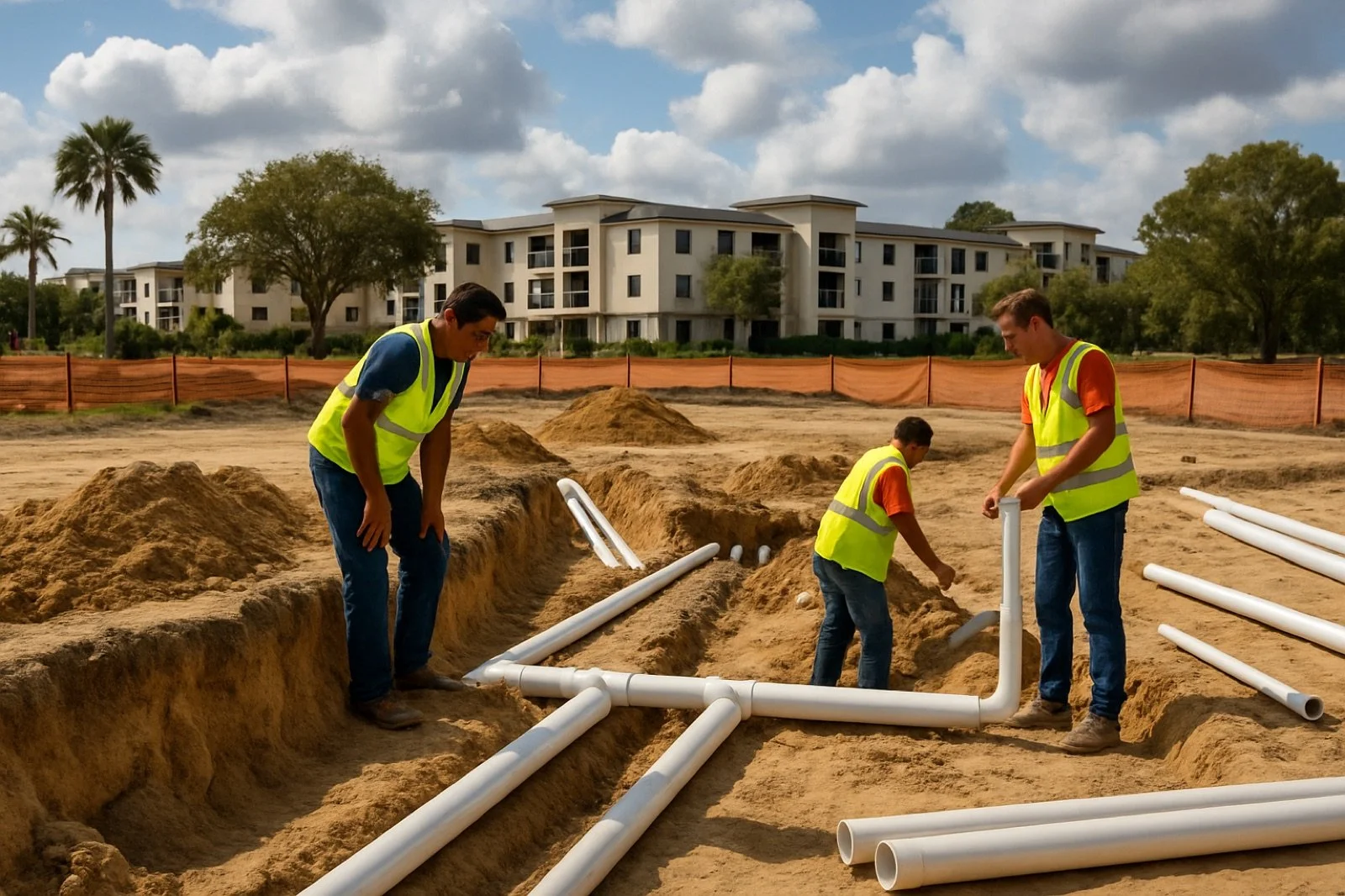
Utility installation on a multifamily development site in St. Petersburg, Florida, showing open trenches, PVC piping, compacted sandy soil, construction workers in safety vests, erosion control fencing, and a partly cloudy October sky
7. Hurricane Season Awareness in October
October in St. Petersburg can be beautiful, but experienced local builders know not to ignore hurricane season. While the weather often becomes more comfortable, late-season storms can still affect Tampa Bay. A strong site preparation plan includes storm readiness from day one.
For active multifamily sites, storm preparation may include securing loose materials, protecting excavations, checking erosion controls, clearing drainage paths, and making sure equipment is parked safely. After heavy rain, the site should be inspected before work resumes.
This is one of the reasons local experience matters. BTB Development understands that Florida construction schedules must be flexible enough to respond to weather, yet disciplined enough to keep a project moving forward.
Why Choose BTB Development for Your Multifamily Site Preparation?
Choosing the right development partner is about more than hiring someone with equipment. You need a team that understands land, permitting, drainage, construction sequencing, neighborhood impacts, and the financial importance of staying on schedule.
BTB Development is rooted in St. Petersburg, Florida. We know the local climate, the soil conditions, the coastal challenges, and the level of planning required to prepare multifamily sites correctly. Our approach is practical, detail-oriented, and focused on helping owners move from raw land or redevelopment property to a construction-ready site.
Local knowledge: We understand St. Petersburg’s weather patterns, permitting process, flood concerns, and infill development challenges.
Proactive planning: We identify potential issues early, before they become expensive field problems.
Reliable coordination: We work with engineers, surveyors, utility providers, inspectors, and subcontractors to keep the project organized.
Schedule awareness: We plan around October weather conditions, storm risks, and site-specific constraints.
Owner-focused communication: We keep clients informed so they can make confident decisions throughout the preparation phase.
Build on a Better Foundation
Multifamily development in St. Petersburg starts with smart site preparation. From due diligence and permitting to grading, drainage, utilities, and storm readiness, every step matters. October can be an excellent month to move site work forward, but it requires the right planning and the right local team.
If you are considering a multifamily project in St. Petersburg or the surrounding Pinellas County area, BTB Development is ready to help you prepare your site with confidence. We bring local insight, construction knowledge, and a commitment to doing the job right from the ground up.
Contact BTB Development today to discuss your multifamily site preparation needs in St. Petersburg, Florida.