October is one of the most important months for smart excavation planning in St. Petersburg, Florida. While temperatures begin to ease slightly, our area is still dealing with the tail end of hurricane season, lingering afternoon storms, high humidity, saturated soils, and occasional coastal flooding or king tides. For homeowners, builders, commercial property owners, and developers, this means one thing: erosion control cannot be an afterthought.
At BTB Development, we understand that excavation is not just about moving dirt. It is about protecting your property, preserving drainage patterns, maintaining jobsite safety, and preventing costly damage to nearby structures, landscaping, streets, sidewalks, and waterways. Done correctly, excavation sets the stage for a successful project. Done carelessly, it can create erosion problems that grow quickly in Florida’s October weather.
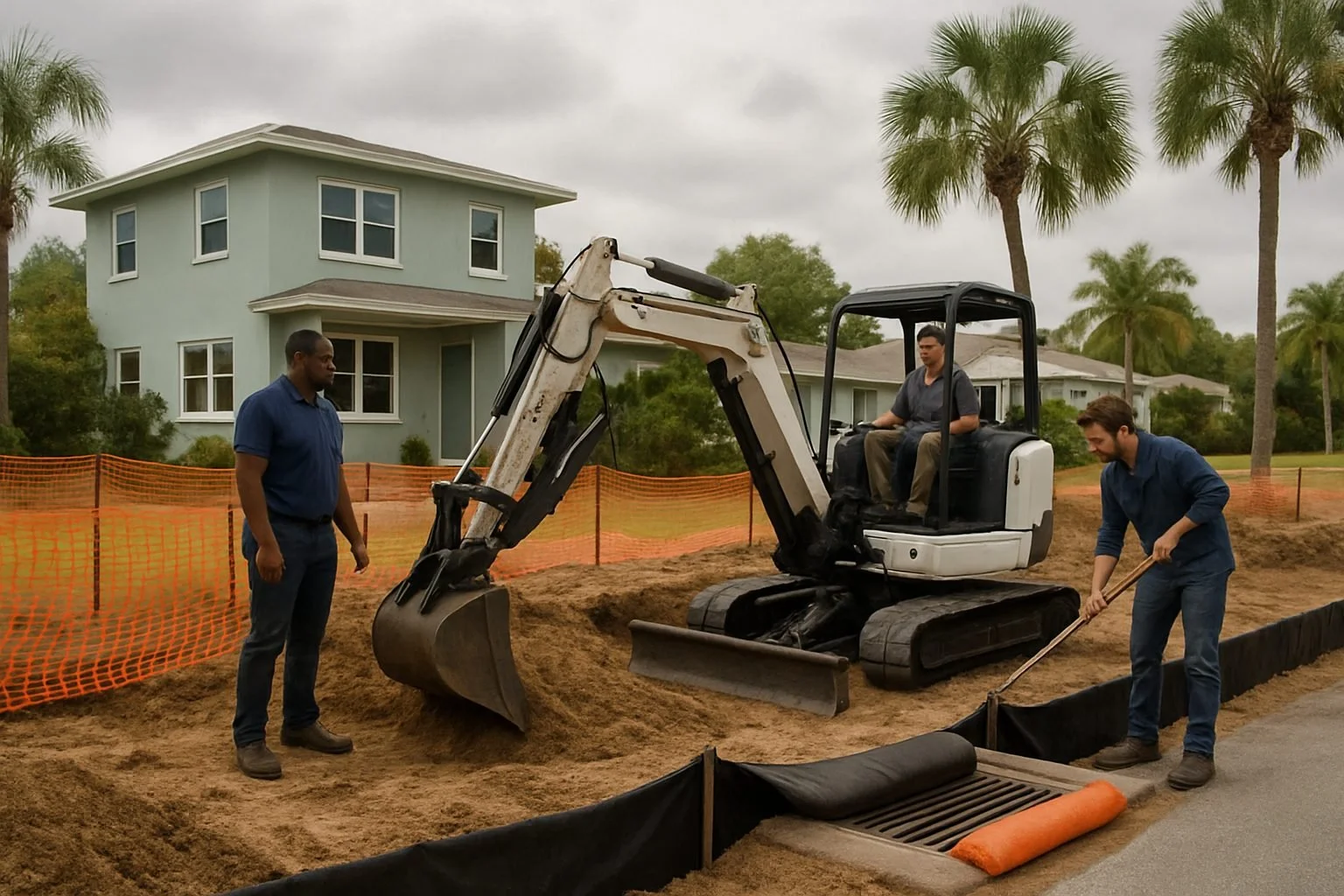
A professional excavation crew in St. Petersburg Florida working on a residential construction site in October, with compact excavator equipment, orange erosion control fencing, silt barriers, sandy soil, palm trees, overcast coastal sky, and nearby storm drain protection in place
Key Takeaways:
October excavation in St. Petersburg requires extra erosion planning because soils may still be saturated from late-summer rains and tropical weather.
Using silt fencing, stabilized entrances, grading, and temporary drainage controls can help prevent sediment runoff and property damage.
Choosing an experienced local excavation contractor like BTB Development helps ensure your site is prepared for Florida’s unique coastal conditions.
Proactive erosion control can reduce delays, improve jobsite safety, and help protect surrounding properties and waterways.
Why October Weather Matters for Excavation in St. Petersburg
October in St. Petersburg can be unpredictable. Some days feel dry and breezy as seasonal fronts begin to move through. Other days bring heavy rain, tropical moisture, and sudden downpours. Because the ground may already be holding water from the summer rainy season, even a short storm can cause exposed soil to wash away quickly.
St. Petersburg’s coastal environment also adds another layer of complexity. Many properties are located near low-lying areas, canals, bays, or stormwater systems. When excavation opens up soil and changes the surface grade, water will naturally seek the lowest path. Without proper controls, that water can carry sediment into streets, drains, neighboring yards, and sensitive waterways.
Common October erosion risks include:
Saturated sandy soils that shift or wash away easily during storms.
Heavy rain events associated with tropical systems or late-season thunderstorms.
King tides and coastal flooding that can slow drainage in low-lying areas.
Wind exposure on open sites, which can move dry topsoil or sand.
Runoff toward storm drains if sediment barriers are not installed properly.
Start With a Site-Specific Erosion Control Plan
No two excavation projects are exactly the same. A backyard pool dig, a commercial foundation prep, a drainage improvement project, and a land-clearing job all require different erosion control strategies. Before work begins, BTB Development evaluates the property’s slope, soil condition, access points, drainage routes, nearby structures, and potential runoff areas.
In October, we pay special attention to how water will move if a storm arrives overnight or over the weekend. A good excavation plan should not only work when the crew is on site. It should also protect the property when weather changes suddenly.
A strong erosion control plan may include:
Identifying where runoff is likely to flow during heavy rain.
Protecting storm drains, gutters, inlets, and nearby paved areas.
Installing silt fencing or sediment barriers before major soil disturbance.
Creating temporary swales or berms to redirect water safely.
Stabilizing access points so vehicles do not track mud and sediment into the street.
Scheduling excavation in phases to limit how much soil is exposed at one time.
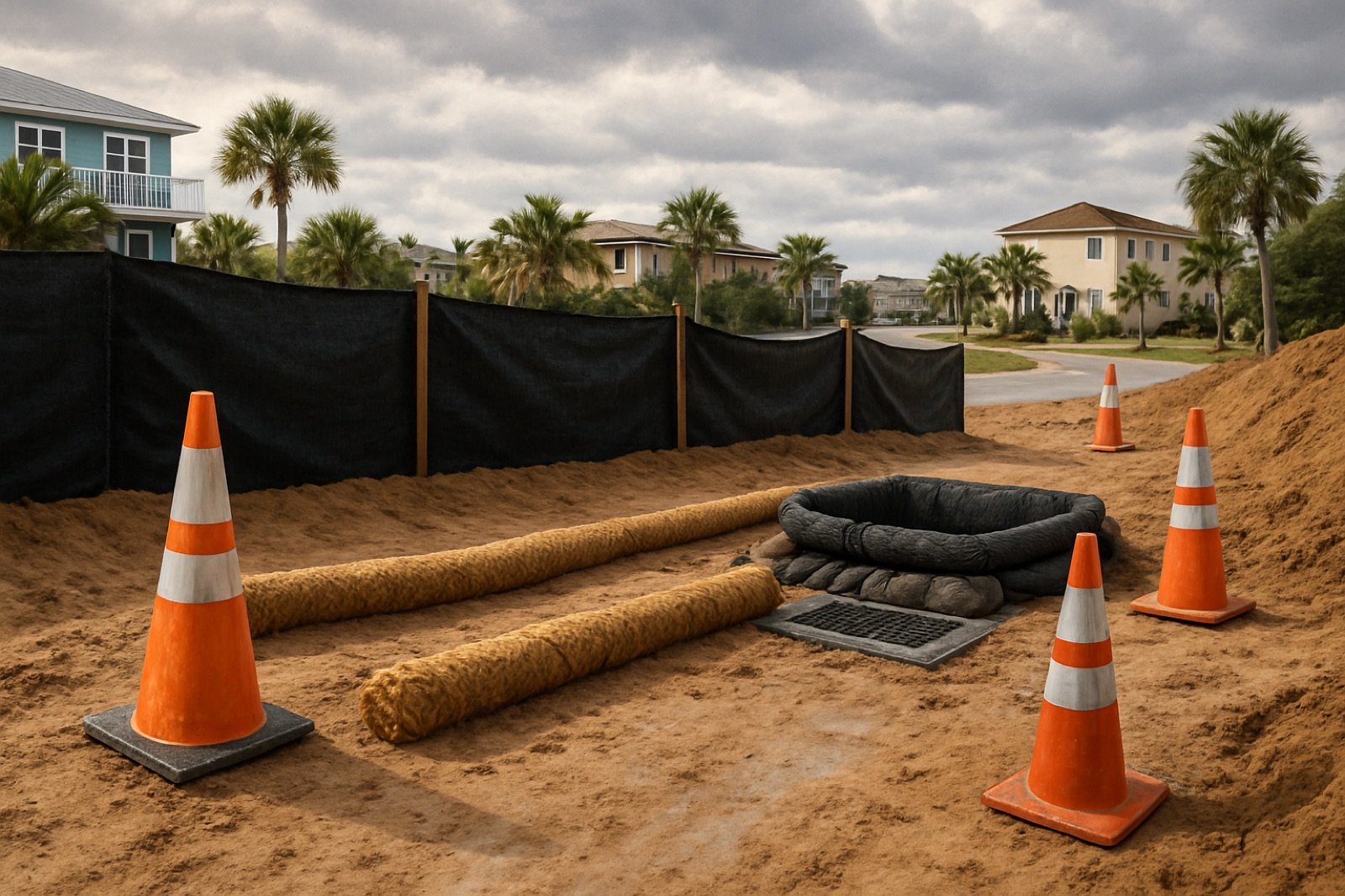
Close-up of erosion control measures on a Florida excavation site, showing properly installed black silt fence, straw wattles, storm drain inlet protection, damp sandy soil, orange construction cones, and a cloudy October sky in a coastal neighborhood
Use Silt Fencing and Sediment Barriers Correctly
Silt fencing is one of the most common erosion control tools, but it only works when installed properly. In sandy Florida soils, a loosely placed fence can fail during a heavy October rain. The bottom of the fence must be trenched in, secured, and positioned where water naturally flows—not simply placed around the site for appearance.
Sediment barriers help slow runoff so soil particles can settle before water leaves the work area. Depending on the project, this may involve silt fencing, straw wattles, gravel bags, inlet protection, or temporary berms. The goal is to keep sediment on the construction site and out of roads, neighboring properties, and stormwater systems.
“BTB Development didn’t just show up and start digging. They looked at where the water would go, protected the drain near our driveway, and kept the site clean after a heavy rain. That made a big difference.”
— Residential customer in St. Petersburg, FL
Limit Exposed Soil Whenever Possible
One of the simplest ways to reduce erosion is to expose only the areas that need to be excavated. The more bare soil left open, the more opportunity there is for rain and wind to move it. This is especially important in October, when weather can shift quickly from sunny to stormy.
BTB Development often approaches excavation in controlled phases. This allows us to complete necessary digging while reducing the amount of disturbed soil at any given time. When practical, we also recommend temporary stabilization methods such as covering soil stockpiles, compacting exposed areas, or using mulch, stone, or matting in vulnerable zones.
Soil stockpiles deserve special attention. A pile of loose dirt may seem harmless, but during a heavy rain it can become a major source of sediment runoff. Stockpiles should be placed away from drainage paths, covered when necessary, and protected with perimeter controls.
Maintain Proper Grading and Drainage
Excavation changes the way water moves across a property. If grading is not handled carefully, runoff can be directed toward a foundation, patio, pool area, neighboring lot, or public right-of-way. Proper grading is one of the most effective ways to prevent erosion and long-term drainage problems.
In St. Petersburg, where many properties are relatively flat, small grade changes can make a big difference. BTB Development focuses on creating positive drainage that moves water away from structures and toward approved drainage areas. During October, we also consider temporary drainage conditions, because a site may be exposed to heavy rainfall before the final project is complete.
Good drainage planning helps reduce:
Soil washouts around foundations or footings.
Standing water in excavated areas.
Undermining of driveways, sidewalks, or hardscapes.
Sediment runoff into storm drains.
Delays caused by muddy or unstable site conditions.
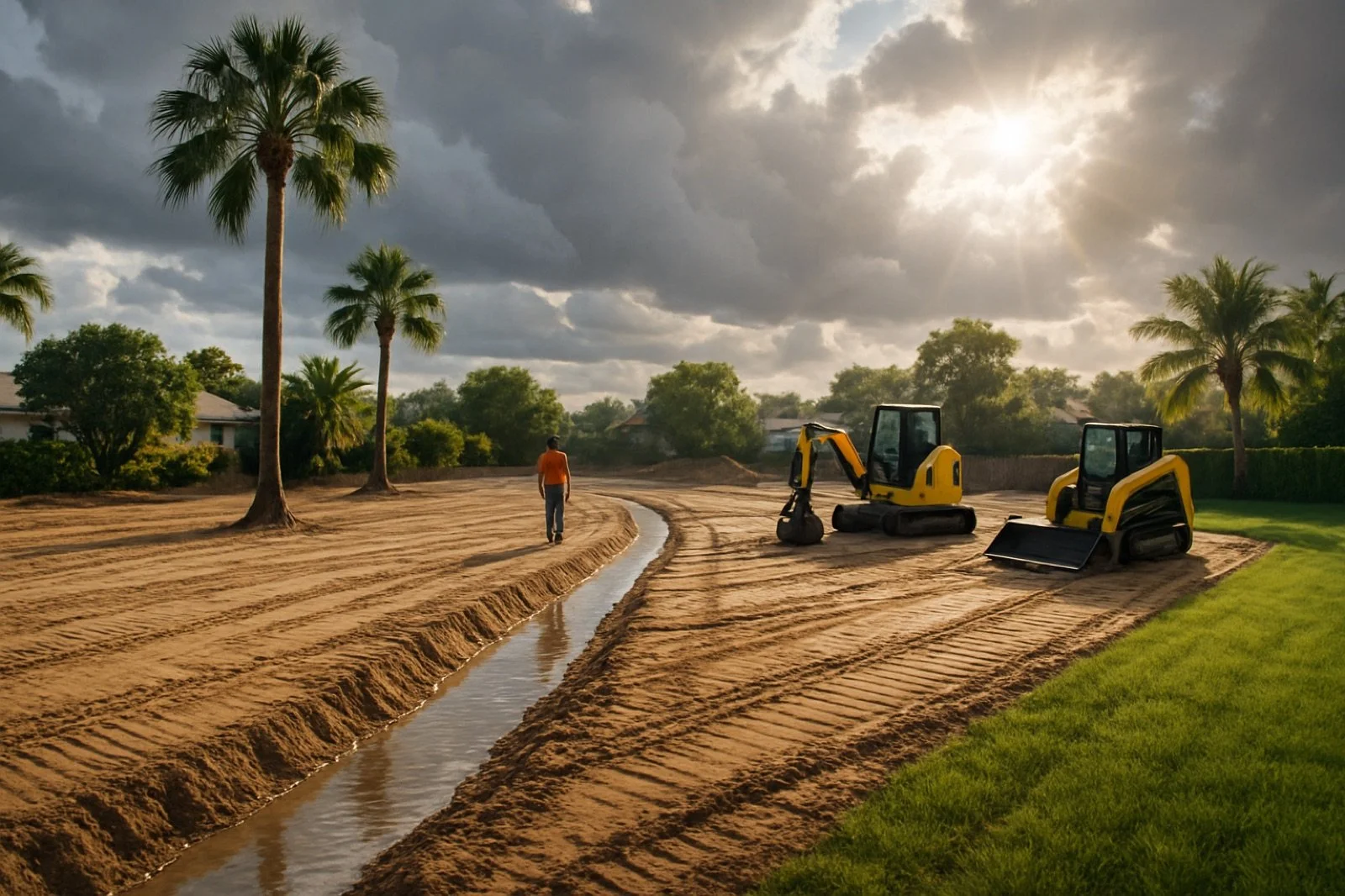
Wide view of a clean and organized St. Petersburg Florida excavation project after rainfall, with graded sandy soil, temporary drainage swale, compact construction equipment, protected neighboring lawn, palm trees, and sunlight breaking through October storm clouds
Stabilize Construction Entrances and Work Areas
Vehicle traffic can contribute to erosion if a jobsite entrance is not stabilized. Trucks and equipment moving in and out of an excavation area can track mud, sand, and sediment onto streets. Once that material reaches pavement, the next rain can carry it directly into storm drains.
A stabilized entrance, often using crushed stone or similar material, helps reduce tracking and keeps the site cleaner. It also improves traction for equipment and creates a safer work environment. On tighter St. Petersburg properties, where access may be limited, planning the equipment route is especially important.
Inspect Erosion Controls After Rain
Installing erosion controls is only the first step. They need to be inspected and maintained, especially after October rain events. A silt fence that worked perfectly on Monday may be overloaded or damaged after a Wednesday storm. Sediment may need to be removed, barriers may need to be reset, and drainage paths may need to be cleared.
At BTB Development, we believe erosion control is an active process. We monitor site conditions and adjust as needed, because Florida weather does not always follow the forecast. This attention to detail helps reduce surprises and keeps projects moving forward.
Why Choose BTB Development for Your Excavation Project?
When you hire an excavation contractor in St. Petersburg, you need more than equipment. You need a team that understands local soil, drainage, weather, access limitations, and the importance of protecting your investment. BTB Development brings a practical, detail-focused approach to every project.
Customers choose BTB Development because we offer:
Local experience: We understand the conditions that affect excavation in St. Petersburg and the surrounding Pinellas County area.
Careful planning: We evaluate drainage, access, erosion risk, and site protection before work begins.
Reliable communication: We keep customers informed so they know what to expect throughout the excavation process.
Professional jobsite practices: We respect your property, nearby homes, roadways, and surrounding landscape.
Weather-aware scheduling: We plan around Florida’s seasonal patterns whenever possible to help reduce delays and site damage.
Excavation is the foundation of many successful construction and property improvement projects. Whether you are preparing for new construction, drainage work, land clearing, utility installation, or site development, the right contractor can help prevent erosion issues before they become expensive problems.
Plan Ahead Before the Next October Storm
October can be a great month to move forward with excavation in St. Petersburg, but only when the project is managed with erosion control in mind. By planning drainage, protecting exposed soils, stabilizing access points, and monitoring the site after rain, property owners can reduce risk and keep work on track.
If you are preparing for an excavation project this fall, BTB Development is ready to help. Our team brings local knowledge, professional equipment, and a commitment to doing the job right from the start. Contact BTB Development today to discuss your project and learn how we can help protect your property during every phase of excavation.