October in St. Petersburg, Florida, is a beautiful time to build—but it is also a month that demands smart planning. While the peak of summer thunderstorms begins to taper off, our Gulf Coast weather can still bring heavy afternoon showers, tropical moisture, saturated soils, and quick runoff across active construction sites. For property owners, developers, and builders, erosion control is not just a regulatory checkbox—it is a major part of protecting your investment from delays, soil loss, drainage problems, and environmental damage.
At BTB Development, we understand the local conditions that make site preparation in St. Petersburg unique. From sandy soils and flat terrain to sudden rain events and nearby waterways, erosion control must be built into the project from day one. A well-prepared site can keep your project moving safely and efficiently, even when October rain showers roll through Pinellas County.
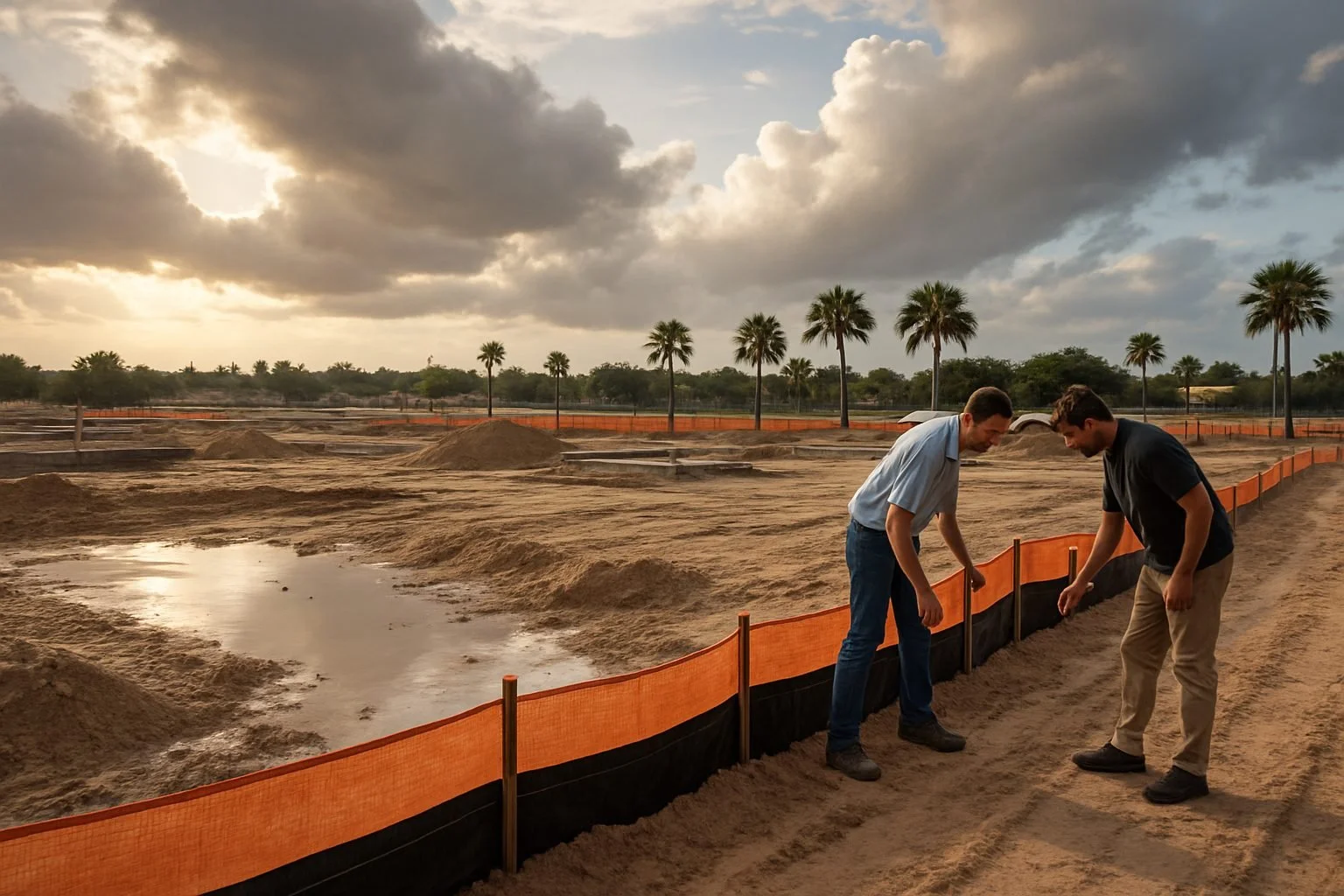
A wide photographic view of an active construction site in St. Petersburg, Florida after a light October rain, with sandy soil, orange silt fencing, storm clouds breaking in the sky, palm trees in the background, and workers inspecting erosion control measures
Key Takeaways:
Install erosion control measures before clearing, grading, or excavation begins—especially during Florida’s rainy fall weather.
Use site-specific strategies such as silt fencing, inlet protection, stabilized entrances, and temporary ground cover to control runoff.
Plan for October conditions in St. Petersburg, including sudden rain showers, saturated soils, and runoff toward streets, drains, or nearby water bodies.
Work with an experienced local site preparation contractor like BTB Development to reduce delays, protect the property, and maintain compliance.
Why October Weather Matters for Site Preparation in St. Petersburg
October is a transitional weather month in St. Petersburg. We typically see slightly cooler temperatures, lower humidity than midsummer, and fewer daily storms—but that does not mean rain risk disappears. Tropical systems can still influence the Gulf Coast, and even a short, heavy shower can move a surprising amount of soil on a cleared site.
During site preparation, vegetation is often removed, soil is exposed, and grading changes how water moves across the property. Without erosion controls in place, rainfall can wash sediment into storm drains, neighboring properties, roadways, retention areas, or protected waterways. This can create expensive cleanup requirements, project delays, and potential compliance issues.
Common October site challenges in St. Petersburg include:
Sandy soils that shift easily when exposed to flowing water.
Flat elevations that can cause water to pond instead of draining quickly.
Short, intense rain showers that create fast runoff across newly graded areas.
Nearby storm drains and canals that must be protected from sediment discharge.
High groundwater or saturated areas following back-to-back rain events.
Start With a Site-Specific Erosion Control Plan
No two properties in St. Petersburg are exactly alike. A site near downtown may have different concerns than a waterfront lot, a residential infill parcel, or a commercial property near a major roadway. That is why erosion control should begin with a careful site evaluation before equipment ever starts moving dirt.
At BTB Development, we look at slope, soil conditions, drainage patterns, existing vegetation, access points, stormwater structures, and surrounding properties. The goal is to understand where water will go during a rain event and how to slow it, filter it, and redirect it safely.
A strong erosion control plan should answer questions like:
Where will runoff naturally flow during a storm?
Which storm drains, sidewalks, streets, or neighboring lots need protection?
Where should construction vehicles enter and exit the site?
Which areas should be cleared now, and which can remain vegetated longer?
What temporary controls are needed before permanent drainage is installed?
“BTB Development helped us understand the drainage issues on our lot before construction started. When we had several rainy days in October, the site stayed controlled and the project kept moving.”
Local St. Petersburg Property Owner
Silt Fencing: A First Line of Defense
Silt fencing is one of the most common erosion control tools used during site preparation, and for good reason. When properly installed, it helps slow runoff and capture sediment before it leaves the work area. However, silt fence is only effective when it is placed correctly, trenched into the ground, maintained after storms, and matched to the site’s drainage patterns.
One mistake we often see is treating silt fence like a simple perimeter barrier. In reality, it should be installed where sediment-laden water is likely to flow—not randomly around the property. In St. Petersburg’s sandy soil conditions, proper anchoring is especially important because loose or shallow installation can fail quickly during a strong rain shower.
After October rain events, silt fencing should be inspected for:
Undermining or gaps where water is flowing underneath.
Collapsed sections caused by sediment buildup.
Torn fabric or damaged posts.
Sediment accumulation that needs to be removed.
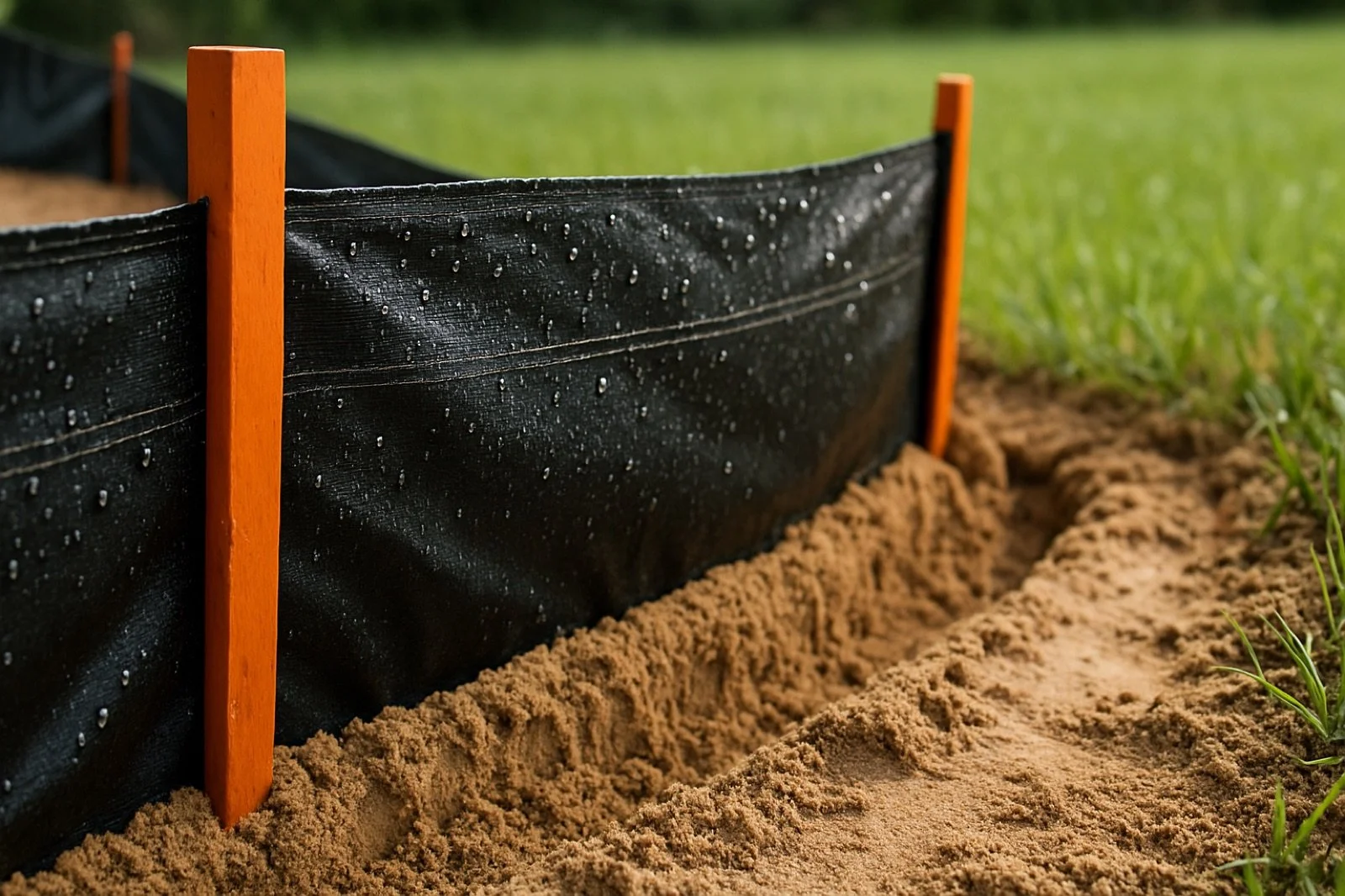
Close-up photographic scene of properly installed black silt fencing trenched into sandy Florida soil along the edge of a construction site, with rain droplets on the fabric, orange safety stakes, and green grass beyond the protected area
Protecting Storm Drains and Inlets
In urban areas of St. Petersburg, storm drain protection is critical. A cleared or graded site can send sediment toward curb inlets very quickly during a rain shower. If sediment reaches the municipal stormwater system, it can contribute to clogged drainage infrastructure and pollution in local waterways.
Inlet protection may include filter socks, gravel bags, sediment barriers, or approved inlet protection devices. The right solution depends on the location, expected runoff volume, and site layout. These controls should be installed before major earthwork begins and checked regularly, especially after heavy rainfall.
For commercial sites, multifamily projects, and infill development, BTB Development pays close attention to how water leaves the site and enters public drainage systems. This helps reduce the risk of runoff-related problems and supports a cleaner, safer jobsite.
Stabilized Construction Entrances Reduce Mud and Sediment Tracking
One of the most practical erosion control strategies is a stabilized construction entrance. This is typically a designated access point built with stone or other approved material to reduce the amount of dirt, sand, and mud tracked onto nearby roads.
During October, when rain can turn an active site soft in a short period of time, construction entrances become even more important. They help keep equipment access predictable and reduce cleanup needs on adjacent streets or sidewalks.
A well-planned construction entrance can help:
Limit sediment from leaving the site on truck tires.
Provide a safer access route for equipment and deliveries.
Reduce complaints from neighbors or nearby businesses.
Support a cleaner, more professional-looking project.
Temporary Ground Cover and Mulching
Exposed soil is vulnerable soil. If part of a site will remain inactive for several days or weeks, temporary stabilization can make a major difference. In Florida, options may include mulch, temporary seeding, erosion control blankets, or other ground cover methods depending on the project type and timeline.
For October site preparation, temporary stabilization is especially useful because rain may arrive with little warning. Covering exposed areas helps reduce splash erosion, slows runoff, and keeps sandy soil from moving across the site. It is a simple step that can prevent larger problems later.
BTB Development works to sequence site clearing and grading in a way that minimizes unnecessary exposure. When practical, we preserve existing vegetation until the area is ready for active work. This approach is often more efficient and more protective than clearing the entire site at once.
Grading for Drainage, Not Just Elevation
Good grading is about more than making a site level or preparing for foundations, driveways, parking areas, or landscaping. It also determines how water will behave. Poor grading can direct runoff toward structures, neighboring properties, sidewalks, or low spots where water collects.
In St. Petersburg, where many properties are relatively flat, drainage-aware grading is essential. Even slight elevation changes can influence whether stormwater drains properly or ponds after a rain shower. During site preparation, BTB Development considers both immediate construction needs and long-term drainage performance.
Temporary swales, diversion berms, and controlled drainage paths may be used to guide water safely through or around the work area. The objective is to prevent uncontrolled flow from cutting channels into soil, undermining work areas, or carrying sediment offsite.
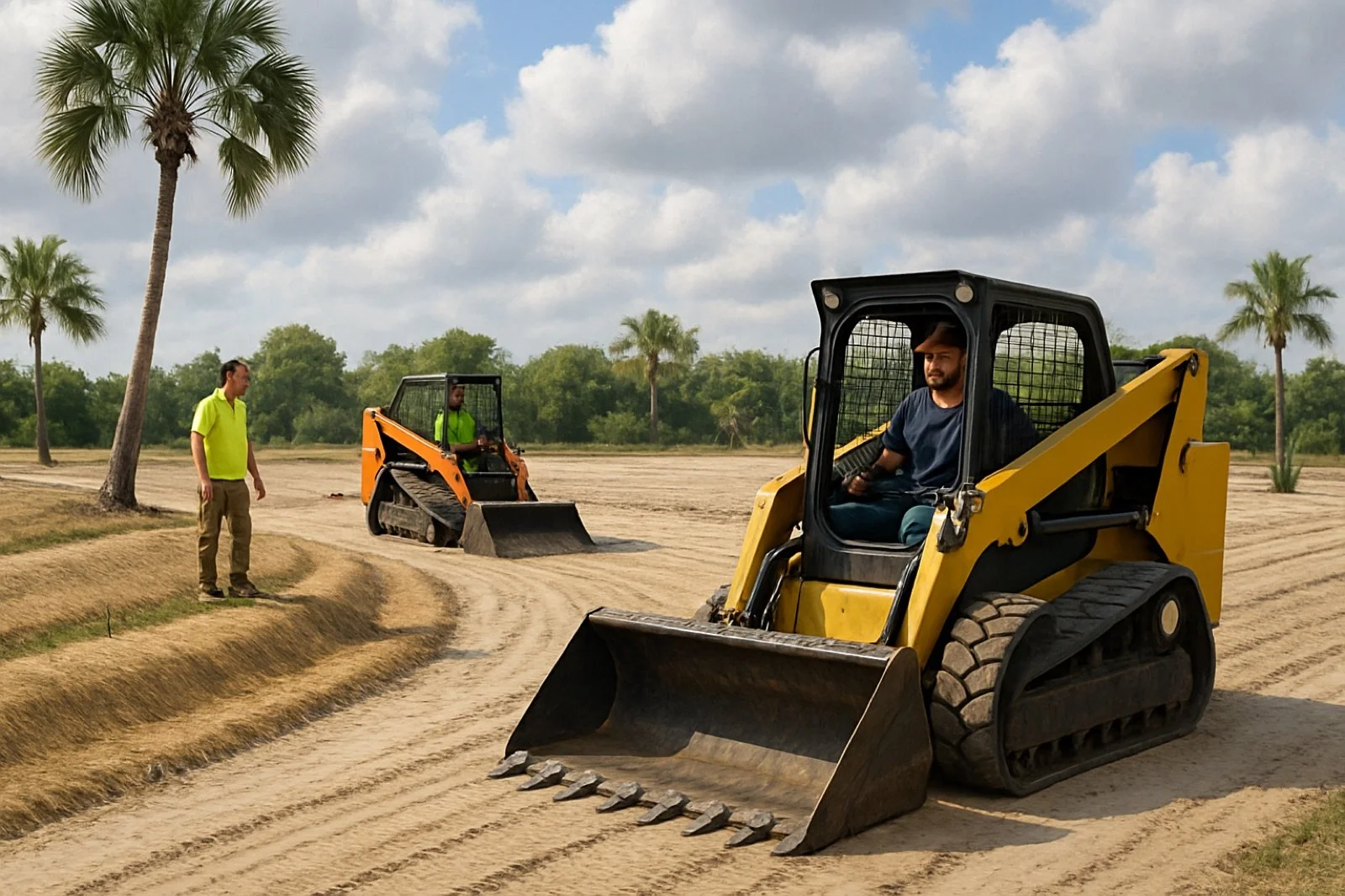
Photographic scene of a Florida site preparation crew grading a sandy lot with compact construction equipment under partly cloudy October skies, with temporary drainage swales, erosion control blankets, and palm trees visible around the property
Routine Inspections After Rain Events
Erosion control is not a “set it and forget it” process. Controls must be maintained, especially during Florida’s rainy periods. A site may look secure before a storm and need adjustments afterward. That is why inspections after rainfall are an important part of keeping a project on track.
After an October shower, a responsible site preparation team should look for signs of erosion, sediment movement, standing water, damaged barriers, blocked inlets, and unstable access points. Catching small issues early prevents them from becoming costly problems.
At BTB Development, we believe that consistent communication and jobsite awareness are just as important as equipment and materials. Our team understands that a clean, controlled site reflects the quality of the entire project.
Why Choose BTB Development for Site Preparation in St. Petersburg?
Choosing the right site preparation contractor matters. You need a team that understands local soil conditions, seasonal weather, stormwater concerns, and the importance of keeping your project moving. BTB Development brings practical experience, local knowledge, and a commitment to doing the job right from the ground up.
When you work with BTB Development, you can expect:
Local expertise: We understand St. Petersburg’s October weather patterns, sandy soils, and drainage challenges.
Proactive planning: We address erosion control before it becomes an emergency.
Professional site management: We focus on safety, access, cleanliness, and efficiency.
Attention to detail: From silt fencing to grading, we know small steps can prevent big issues.
Customer-focused service: We communicate clearly and work to protect your schedule and investment.
Whether you are preparing a residential lot, commercial property, redevelopment site, or larger construction project, erosion control should be part of your plan from the beginning. October rain showers in St. Petersburg can be unpredictable, but with the right strategy, your site can stay protected, compliant, and ready for the next phase of construction.
Prepare Your Site Before the Next Rain Shower
Florida weather rewards preparation. Waiting until soil is already washing away or water is already pooling can lead to unnecessary expenses and delays. By planning ahead with proper erosion control strategies, you protect your property, your timeline, and the surrounding community.
If you are planning a construction project in St. Petersburg, Florida, BTB Development is ready to help you start strong. Contact our team today to discuss site preparation, erosion control, grading, and the steps needed to keep your project moving through October rain showers and beyond.