September in St. Petersburg is beautiful, humid, green—and wet. As an owner of BTB Development here in St. Petersburg, Florida, I can tell you that this time of year can make or break a construction schedule before vertical work ever begins. Site preparation is always important, but during September’s rainy season, it becomes mission-critical.
Between afternoon thunderstorms, tropical moisture, elevated groundwater, and the occasional storm system moving through the Gulf, job sites in Pinellas County need to be planned with drainage, access, compaction, erosion control, and timing in mind. The difference between a well-prepared site and a poorly prepared one often shows up quickly: standing water, soft subgrades, failed inspections, equipment delays, and costly rework.
At BTB Development, we understand the local soil conditions, the seasonal weather patterns, and the practical steps needed to keep projects moving safely and efficiently—even when September rain is in the forecast.
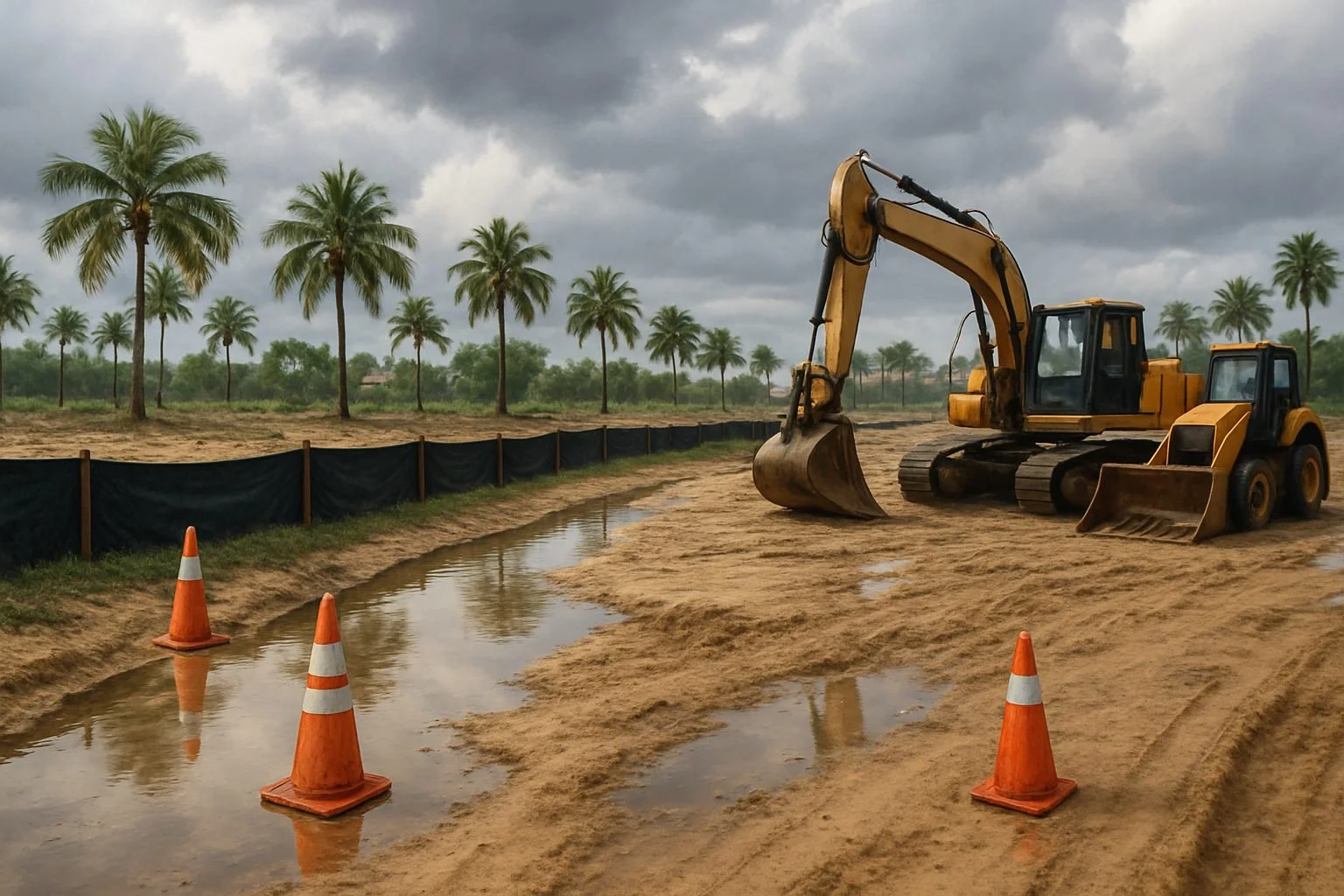
A realistic construction site in St. Petersburg Florida after a September afternoon rainstorm, with wet sandy soil, puddles near erosion control silt fence, orange construction cones, palm trees in the background, cloudy Gulf Coast sky, and heavy equipment parked safely on stabilized ground
Key Takeaways:
September rain can delay site work if drainage, access roads, and erosion controls are not planned before the first major storm.
Wet sandy soils and high groundwater can affect grading, compaction, excavation, utility trenching, and foundation preparation in St. Petersburg.
Choosing a local site preparation contractor like BTB Development helps reduce risk because we understand Pinellas County conditions, permitting expectations, and seasonal construction challenges.
Proactive planning saves money by preventing washouts, failed compaction tests, sediment runoff, and repeated mobilization of crews and equipment.
Why September Rain Matters for Site Preparation
September is one of the wettest months of the year in St. Petersburg. Rain often arrives fast, heavy, and with little warning. A site that looks workable at 9 a.m. can be saturated by mid-afternoon after a strong thunderstorm rolls through. For homeowners, developers, and commercial property owners, this means the early phases of construction need extra attention.
Site preparation is not just clearing land and moving dirt. It includes evaluating soil conditions, managing stormwater, establishing grades, preparing building pads, protecting adjacent properties, and creating safe access for crews and equipment. In September, every one of those tasks is affected by rain.
Some of the biggest weather-related issues we see during this time of year include:
Standing water in low areas of the property
Soft or unstable access paths for dump trucks and equipment
Washouts around graded slopes or open excavations
Sediment movement toward streets, sidewalks, storm drains, or neighboring properties
Difficulty achieving proper compaction in wet soils
Utility trenches filling with water before installation is complete
When these issues are ignored, they can create a chain reaction. A delayed building pad can delay foundations. Delayed foundations can delay framing. Delayed framing can affect subcontractor schedules, inspections, and overall project costs.
St. Petersburg Soil Conditions and High Groundwater
Many sites in St. Petersburg have sandy soils, fill material, shell, organic layers, or low-lying drainage challenges depending on the neighborhood and property history. Sandy soils can drain well in some areas, but that does not mean they are always easy to work with during rainy periods. When the water table is high, even sandy sites can become unstable or difficult to compact properly.
For site preparation, moisture content matters. If the soil is too wet, it may not compact to the required density. If a contractor rushes through that step, the result can be settlement, cracked slabs, drainage problems, and long-term performance issues. That is why BTB Development pays close attention to conditions before, during, and after rainfall.
In September, we often plan work around short weather windows. That may mean prioritizing drainage swales, temporary stabilization, or access improvements before moving into heavier grading or excavation. It may also mean pausing certain activities until the site is dry enough to do the job correctly.
“BTB Development helped us understand why our site kept holding water after summer storms. They corrected the grading, stabilized the access area, and kept the project moving even with rain in the forecast.”
— Local St. Petersburg property owner
Drainage Planning Comes First in September
One of the most important parts of September site preparation in St. Petersburg is drainage planning. Before major earthwork begins, a contractor should understand where water naturally wants to go, where it should not go, and how to keep the site compliant during rain events.
At BTB Development, we look at the entire property, not just the building footprint. We evaluate slope, existing drainage patterns, nearby roads, neighboring lots, stormwater structures, and areas that may be vulnerable to erosion.
Common drainage and stormwater considerations include:
Temporary swales or berms to redirect stormwater safely
Silt fence, inlet protection, and sediment control measures
Stabilized construction entrances to reduce mud and sediment tracking
Maintaining positive drainage away from future structures
Protecting open excavations and utility trenches from collapse or flooding
Coordinating grading with final stormwater management requirements
Proper drainage planning is especially important in dense St. Petersburg neighborhoods where one property’s runoff can quickly become a neighbor’s problem. Good site prep protects your project, but it also protects surrounding properties and public infrastructure.
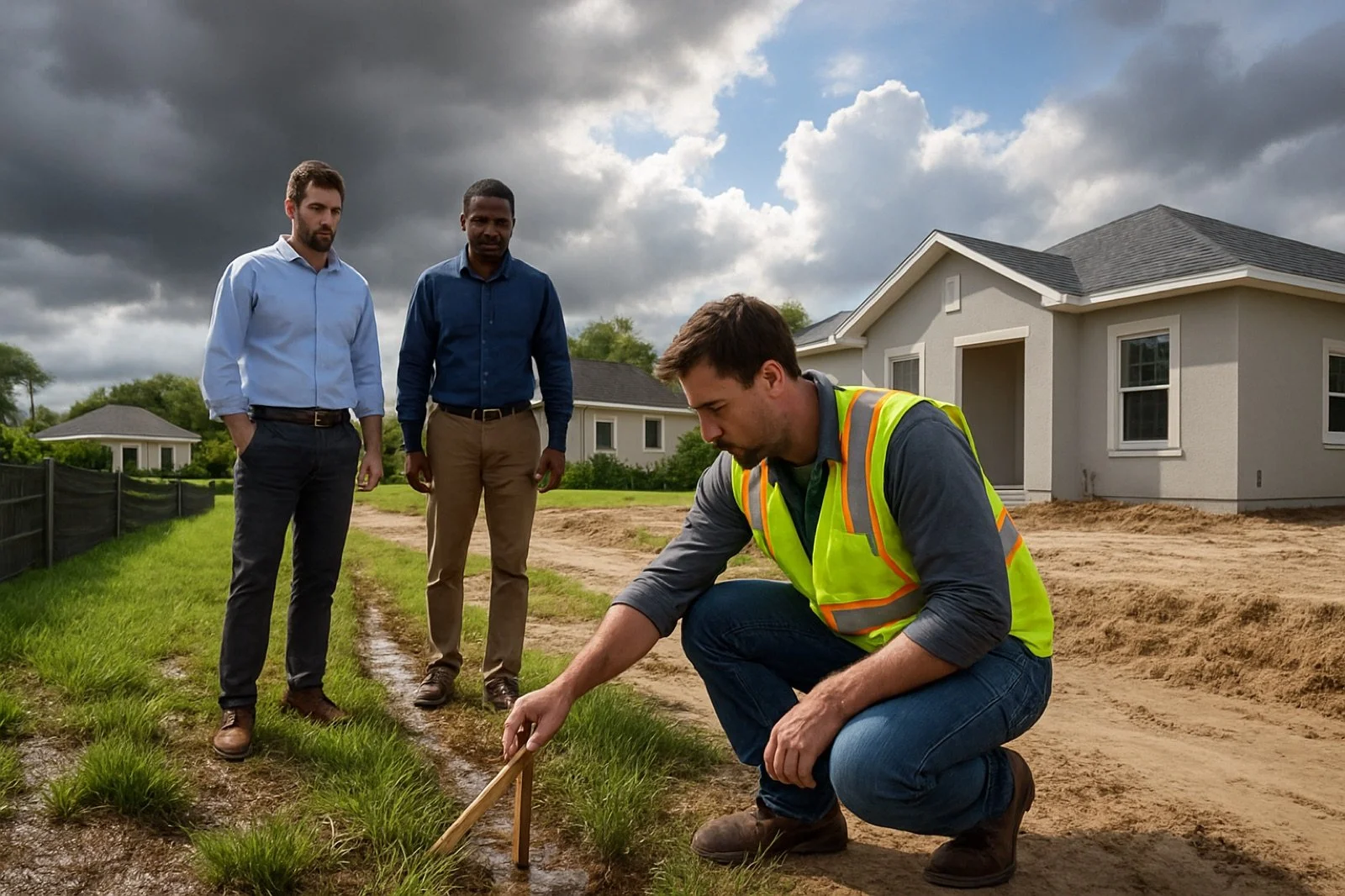
A BTB Development crew inspecting drainage on a residential construction site in St. Petersburg Florida, with a worker in a safety vest checking grade near a temporary swale, silt fence along the property line, wet grass, sandy soil, and storm clouds breaking after rain
How Rain Affects Equipment Access and Scheduling
Heavy equipment is essential for clearing, excavation, grading, demolition, hauling, and pad preparation. But in September, equipment access has to be carefully managed. A saturated job site can cause machinery to rut the soil, damage finished grades, or become stuck. Trucks entering and exiting a wet site can also track sediment onto public roads, which creates safety concerns and potential compliance issues.
This is why temporary access planning matters. A stabilized construction entrance, properly placed aggregate, and smart sequencing can prevent major delays. Sometimes the best decision is to work one section of the site at a time rather than disturbing the entire property before a storm.
Scheduling also needs flexibility. September weather in St. Petersburg can change quickly, and a contractor who does not adjust to conditions can make expensive mistakes. BTB Development monitors weather patterns, communicates clearly with customers, and sequences work in a way that protects the site.
For example, if heavy rain is expected, we may prioritize:
Securing erosion control measures
Stabilizing exposed soil
Covering or protecting sensitive areas
Completing drainage cuts before the storm arrives
Delaying compaction until the moisture content is appropriate
That kind of planning is not just about convenience. It is about preventing rework and protecting your investment.
Erosion Control Is Not Optional
During September storms, unprotected soil can move quickly. Sediment can wash into streets, alleys, drainage inlets, landscaped areas, and neighboring properties. This is especially important in coastal communities like St. Petersburg, where stormwater management and environmental protection are serious concerns.
Erosion control should be installed early and maintained throughout the project. It is not enough to install silt fence once and forget about it. After heavy rain, erosion controls should be inspected, repaired, or replaced as needed.
BTB Development takes this seriously because erosion problems can lead to project delays, cleanup costs, complaints, and inspection issues. A clean, organized site is usually a safer and more efficient site.
Why Local Experience Matters in St. Petersburg
Site preparation is not the same everywhere. A contractor who understands inland clay soils in another state may not automatically understand sandy coastal soils, high groundwater, tropical rainfall, and Pinellas County construction expectations. Local experience matters because every decision—from grading to access to drainage—needs to fit the environment.
BTB Development is based in St. Petersburg, Florida. We know what September weather can do to a job site because we work through it every year. We understand that a successful project starts long before the foundation is poured. It starts with a properly prepared site, a realistic schedule, and a plan that accounts for rain.
Customers choose BTB Development because we bring:
Local knowledge: We understand St. Petersburg weather, soil, drainage, and neighborhood conditions.
Reliable communication: We keep customers informed when rain affects scheduling or site conditions.
Professional planning: We focus on sequencing, erosion control, access, and stormwater before problems happen.
Quality workmanship: We do not rush critical site prep steps just to beat the weather.
Problem-solving experience: We know how to adapt when storms, groundwater, or unexpected soil conditions appear.
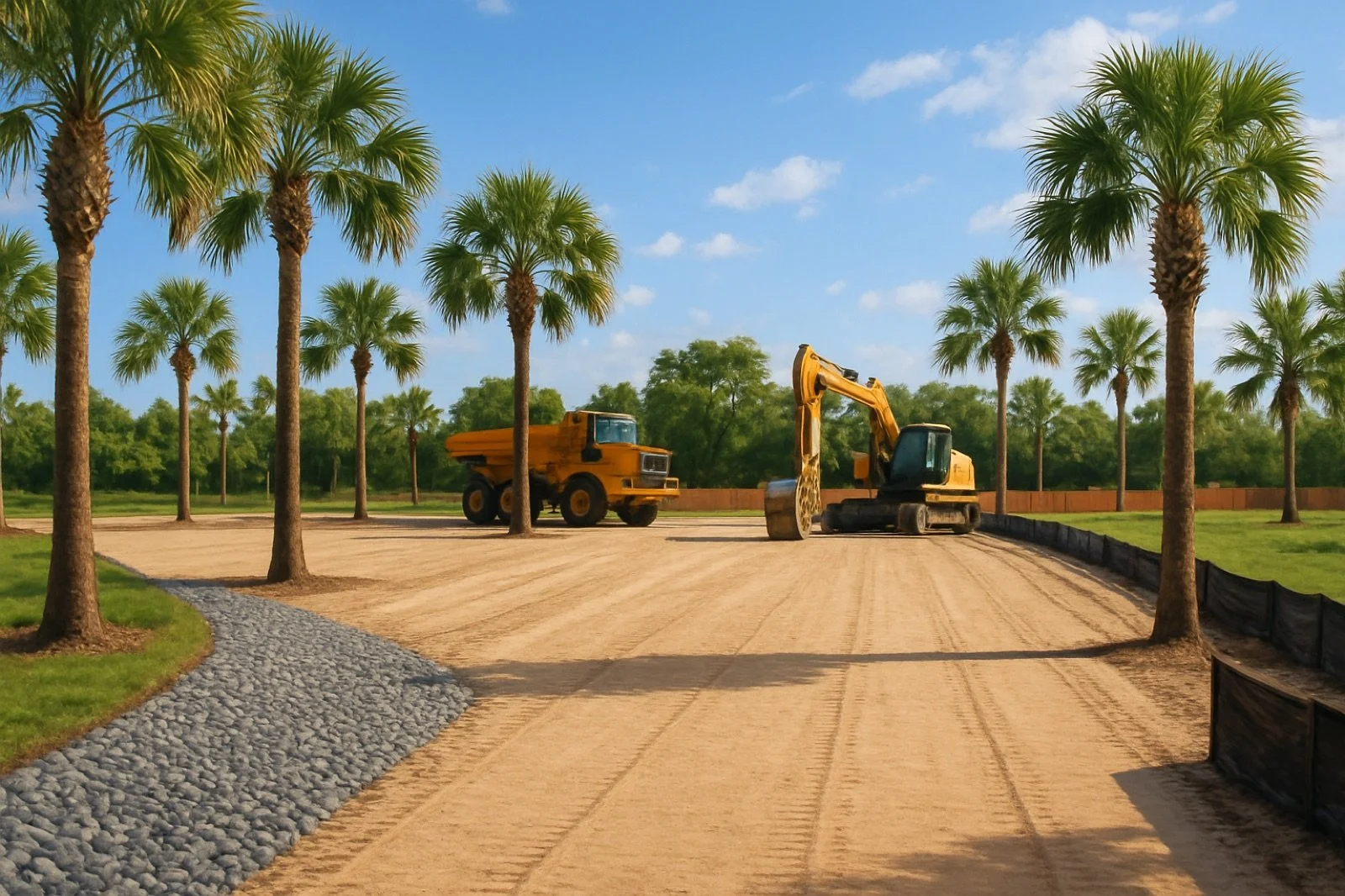
A clean and organized St. Petersburg Florida construction site prepared by BTB Development after grading, with compacted sandy building pad, stabilized gravel entrance, erosion control in place, palm trees, blue sky after a September storm, and construction equipment in the background
Protecting Your Timeline and Your Budget
Many customers think rain delays are unavoidable, and sometimes they are. But the costliest delays often come from poor preparation, not the rain itself. A site that is planned correctly can recover faster after a storm. A site with proper drainage, stable access, and maintained erosion controls is far less likely to experience major setbacks.
Good site preparation helps protect your budget by reducing:
Repeated grading work after washouts
Failed compaction tests
Extra hauling due to unsuitable wet material
Equipment downtime
Cleanup from sediment runoff
Inspection delays
In September, the goal is not to pretend rain will not happen. The goal is to prepare for it. That is where BTB Development adds value.
Choose BTB Development for September Site Preparation in St. Petersburg
If you are planning a construction project in St. Petersburg, Florida, September weather should be part of your strategy from day one. Rain affects grading, excavation, compaction, drainage, erosion control, access, and scheduling. The right site preparation contractor will help you anticipate those challenges and keep your project moving in the right direction.
At BTB Development, we approach every job with local knowledge, practical planning, and a commitment to doing the work correctly. Whether you are preparing a residential lot, commercial site, addition, redevelopment project, or new construction pad, we can help you build on a stronger foundation—starting with the ground beneath it.
Ready to prepare your site the right way this September? Contact BTB Development in St. Petersburg, Florida, to discuss your project, schedule a site evaluation, and create a plan that accounts for the realities of Gulf Coast weather.