September in St. Petersburg, Florida is not the time to guess about drainage. Between frequent afternoon thunderstorms, saturated soils, king tide concerns, and the peak of hurricane season, water management becomes one of the most important factors in any civil construction or utility installation project.
At BTB Development, we see this every year: a project that looks straightforward on paper can quickly become complicated if drainage is not planned before underground utilities are installed. Whether you are preparing a commercial site, residential development, roadway improvement, or utility connection, drainage planning should happen early—not after trenching begins.
In a coastal city like St. Petersburg, drainage is not just a site feature. It protects infrastructure, reduces long-term maintenance issues, supports permitting, and helps keep your investment functioning during Florida’s wettest months.
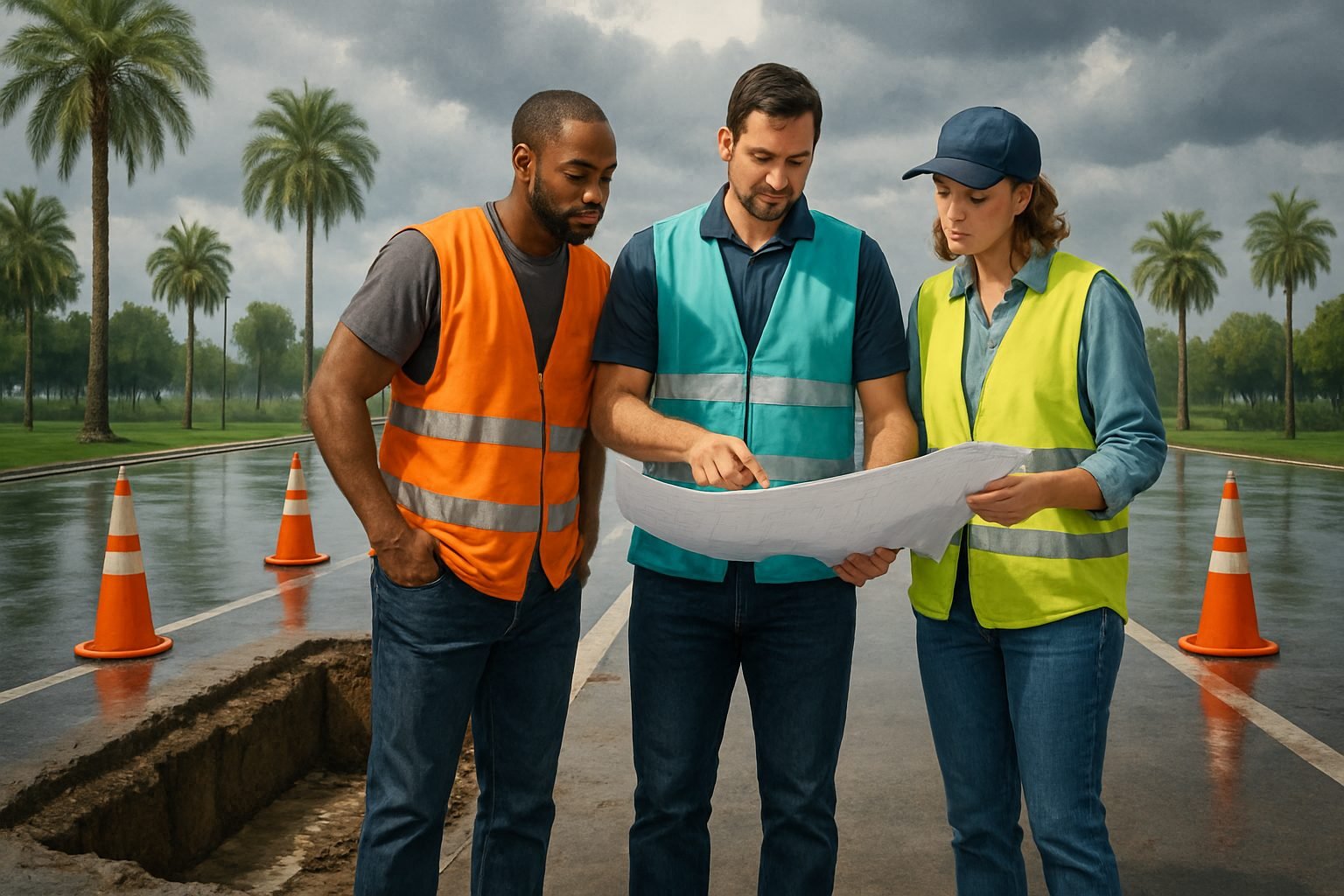
A civil construction crew in St. Petersburg, Florida reviewing drainage plans beside an open utility trench after a September rainstorm, with wet pavement, orange cones, palm trees, and storm clouds in the background
Key Takeaways:
Plan drainage before utility installation to prevent conflicts between stormwater systems, sewer lines, water mains, and electrical or communication conduits.
September weather in St. Petersburg increases drainage risk because heavy rainfall, saturated soils, and hurricane-season storms can expose weak site planning quickly.
Proper drainage planning helps protect your budget by reducing rework, erosion, trench failures, delays, and long-term maintenance issues.
Choosing a local civil contractor matters because St. Petersburg sites require knowledge of coastal soils, flat grades, permitting expectations, and seasonal weather patterns.
September Weather Makes Drainage Planning a Priority
St. Petersburg’s September weather creates a challenging environment for underground construction. Rain can arrive quickly, drainage systems are often tested in real time, and low-lying areas may struggle to move water off-site efficiently. Even a well-designed utility plan can run into problems if stormwater flow is not considered first.
During this time of year, contractors and property owners must pay close attention to:
Heavy afternoon thunderstorms that can flood open trenches
Saturated sandy soils that may shift or collapse during excavation
Stormwater runoff from adjacent streets, roofs, and parking areas
High groundwater conditions in coastal and low-elevation areas
Hurricane-season rain events that can overwhelm temporary controls
Drainage planning helps answer critical questions before crews mobilize. Where will stormwater go during construction? Will a trench collect water? Could runoff erode a newly installed utility line? Are existing inlets, swales, or retention areas sized and positioned correctly? These questions are much easier—and less expensive—to answer before installation starts.
Drainage and Utilities Must Work Together
Civil utilities and drainage systems occupy the same underground environment. Storm drains, sanitary sewer, potable water, reclaimed water, gas, electric, and communications infrastructure all need room, proper slope, access, and protection. If drainage is treated as an afterthought, conflicts can occur that delay the job or force costly redesigns.
For example, a stormwater pipe may need a certain slope to function properly. A sanitary sewer line may also require gravity flow. If both systems are designed independently without careful coordination, one may interfere with the other. The same applies to utility crossings, manhole placement, catch basins, cleanouts, and service connections.
Good drainage planning before utility installation helps determine:
Pipe elevations and required slopes
Safe trench depths and excavation methods
Utility crossing locations
Stormwater inlet and outfall placement
Temporary drainage during active construction
Long-term access for maintenance and repairs
When these elements are coordinated early, the project moves more efficiently. Crews can install utilities with fewer surprises, engineers can confirm that systems are compatible, and owners can avoid unnecessary change orders.
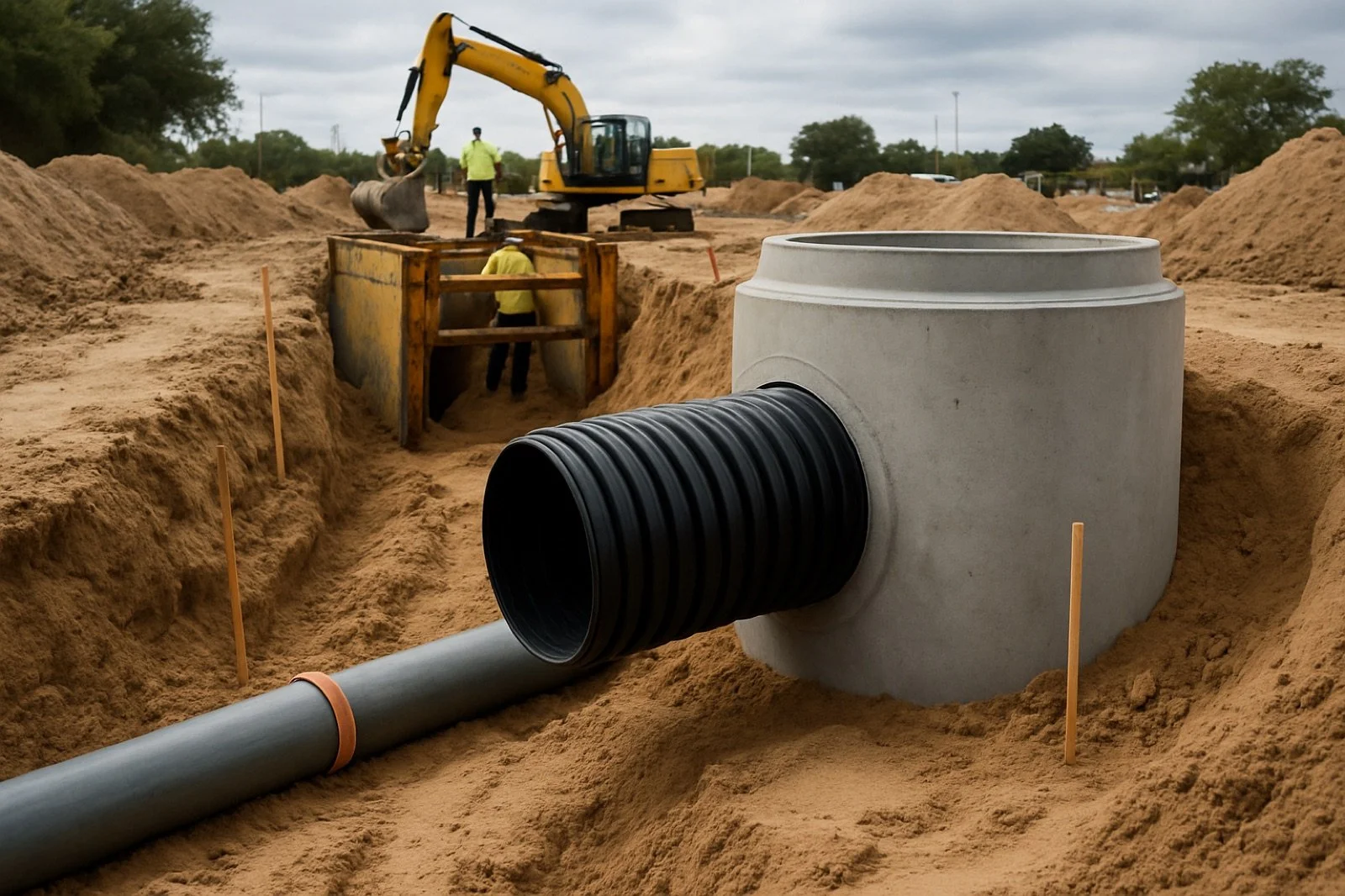
Close-up of storm drain pipe and utility conduit installation on a commercial job site in St. Petersburg, Florida, with compacted sandy soil, trench boxes, survey stakes, and construction equipment under overcast September skies
Poor Drainage Can Damage New Utility Work
One of the biggest risks of skipping drainage planning is damage to newly installed infrastructure. Water is powerful. If it collects around trenches, runs across disturbed soil, or ponds over newly compacted areas, it can weaken the site before the project is complete.
Problems caused by poor drainage can include:
Trench washouts or sidewall collapse
Settlement around newly installed utility lines
Erosion around structures, inlets, and manholes
Delays caused by dewatering or re-excavation
Contaminated runoff leaving the construction site
Premature pavement failure after final restoration
In St. Petersburg, these issues are especially important because many sites are relatively flat. Water may not naturally drain away quickly. Without the right grading plan, temporary controls, and permanent drainage infrastructure, standing water can remain on the site long after a storm passes.
“The best utility installations are the ones where drainage is planned before the first trench is opened. In September, one storm can reveal every weakness in a site plan.”
BTB Development Project Manager, St. Petersburg, FL
Drainage Planning Supports Permitting and Compliance
Drainage is also a permitting issue. Civil construction in St. Petersburg and Pinellas County often requires careful coordination with local requirements, stormwater standards, erosion control practices, and right-of-way considerations. A project that does not properly address drainage can face review delays, inspection problems, or required field changes.
At BTB Development, we understand that construction is not just about moving dirt and installing pipe. It is about building the right way from the start. Our team coordinates site conditions, utility layout, stormwater flow, and constructability so that projects can move forward with confidence.
For property owners, developers, builders, and commercial clients, that means fewer surprises. It also means your project is better prepared for the weather conditions we know are coming in September and throughout hurricane season.
Temporary Drainage Is Just as Important as Permanent Drainage
Many people think about drainage only as the finished system: inlets, pipes, ponds, swales, and grading. But during construction, temporary drainage can be just as important. Before final systems are connected, a job site still needs a way to manage rainfall.
BTB Development considers how water will move through the site during every phase of work. That may include temporary swales, pumps, stabilized entrances, erosion control barriers, inlet protection, or phased grading. These steps help protect both the project and surrounding properties.
In September, temporary drainage planning can be the difference between staying on schedule and losing days to flooded excavations. A dry, stable work area helps crews work safely and efficiently. It also helps protect installed materials and reduces the likelihood of having to redo work after a storm.
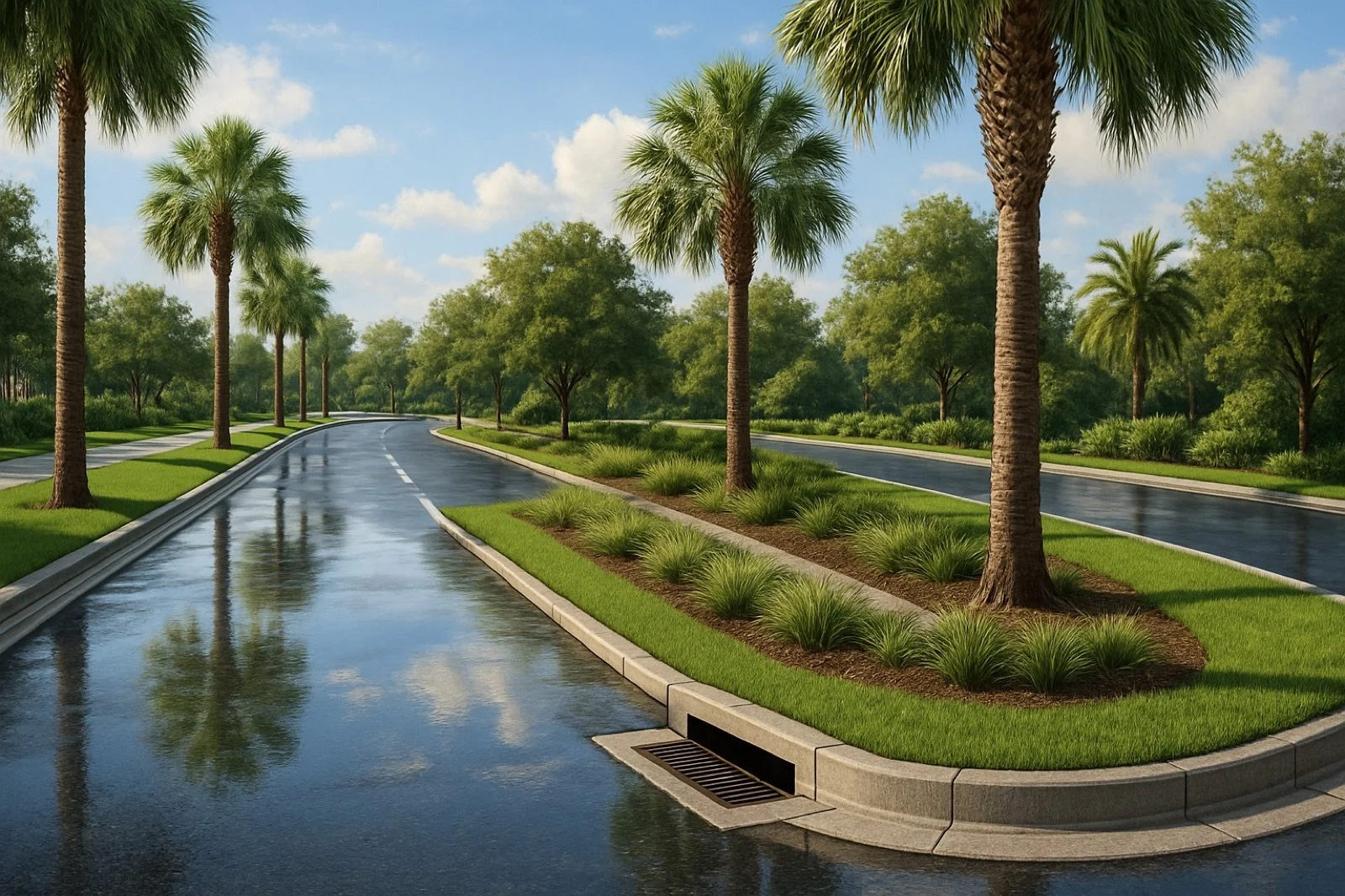
A completed drainage and utility installation area in St. Petersburg, Florida after rainfall, showing clean pavement restoration, curb inlets, landscaped swales, reflective puddles, palm trees, and a bright clearing September sky
Why Choose BTB Development?
As a St. Petersburg-based company, BTB Development brings local experience to every civil utility and drainage project. We understand the conditions that make construction in this area unique: sandy soils, flat terrain, coastal weather, older infrastructure, tight urban sites, and the challenges that come with building during Florida’s rainy season.
When customers choose BTB Development, they get a team that focuses on planning, communication, and execution. We do not believe in treating drainage as an afterthought. We look at how water, utilities, grading, and site access all work together before the project is underway.
Our approach helps customers by providing:
Local knowledge: We understand St. Petersburg weather, soils, drainage patterns, and construction challenges.
Utility coordination: We plan around stormwater, sewer, water, and other underground systems to reduce conflicts.
Practical construction planning: We focus on real-world site conditions, not just what appears on drawings.
Schedule awareness: We plan for seasonal rain and work to reduce weather-related delays whenever possible.
Quality workmanship: We build with long-term performance in mind, not just short-term completion.
Start With Drainage Before You Install Utilities
If you are planning a civil utility installation in St. Petersburg, September is a reminder of why drainage matters. Heavy rain, saturated ground, and storm-season conditions can quickly turn a poorly planned site into an expensive problem. But with the right team and the right planning, those risks can be managed before they impact your schedule or budget.
Drainage planning protects your utilities, your pavement, your structures, and your long-term investment. It also helps create a safer, cleaner, and more efficient construction process from start to finish.
At BTB Development, we help customers build smarter by planning for the conditions that matter most here in St. Petersburg. Before the trench is opened and before the first pipe is installed, we look at the full picture—because successful utility work starts with proper drainage.
Need help with drainage planning or civil utility installation in St. Petersburg, Florida? Contact BTB Development to discuss your upcoming project and build with confidence this September and beyond.