October in St. Petersburg is a transitional month for construction. We are usually moving out of the peak summer thunderstorm pattern, but Gulf moisture, late-season tropical systems, king tides, and sudden downpours can still create real site challenges. One of the biggest issues we watch for at BTB Development is standing water.
Standing water may look like a temporary nuisance, but on an active construction site it can slow schedules, damage materials, compromise soil stability, create safety hazards, and trigger compliance concerns. Whether you are planning a residential build, commercial renovation, site improvement project, or ground-up development in the St. Petersburg area, managing water properly is one of the most important parts of keeping a project moving.
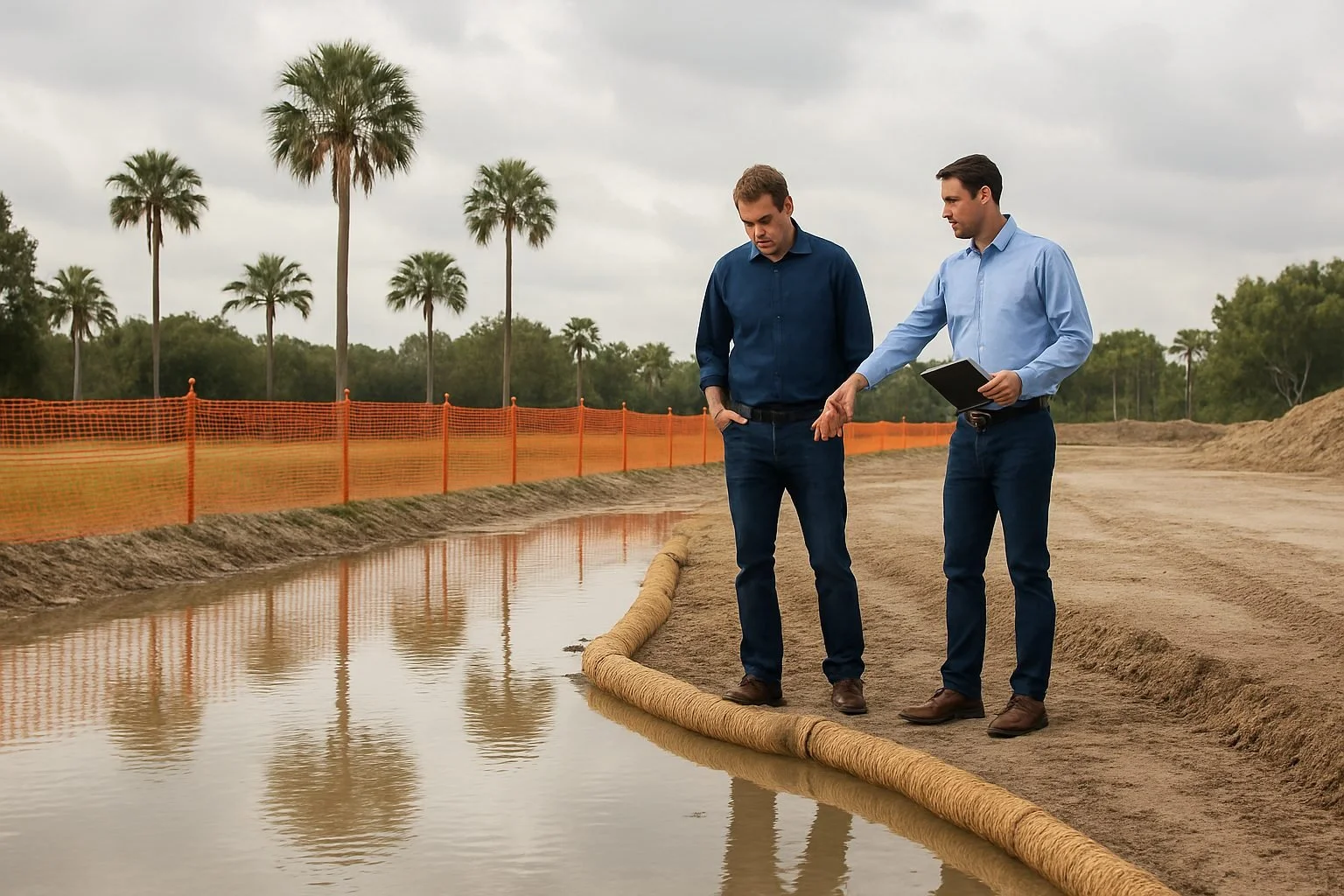
A professional construction site in St. Petersburg, Florida after an October rainstorm, with shallow standing water near compacted soil, orange safety fencing, erosion control wattles, palm trees in the background, and workers inspecting drainage under cloudy Gulf Coast skies
Why Standing Water Is a Big Deal on Construction Sites
In Pinellas County, we deal with sandy soils, low elevations, coastal weather, and localized drainage issues. After heavy rain, water can collect in excavations, low spots, tire ruts, trenches, and unfinished slab areas. If it is not handled quickly and correctly, standing water can become much more than an inconvenience.
Common risks include:
Soft or unstable soil: Saturated soil can lose bearing capacity, making it harder to compact and less reliable for foundations, driveways, sidewalks, and structural work.
Schedule delays: Crews may not be able to safely work around pooled water, especially during excavation, concrete prep, grading, and utility installation.
Material damage: Lumber, drywall, insulation, equipment, and stored materials can be damaged when water is not directed away from staging areas.
Safety hazards: Standing water can hide trip hazards, open holes, sharp debris, electrical hazards, or uneven ground.
Mosquito breeding: In warm October weather, standing water can quickly attract mosquitoes, creating discomfort and health concerns for workers and neighbors.
Erosion and runoff problems: Uncontrolled water can carry sediment off-site, clog drains, or impact neighboring properties.
October Weather Considerations in St. Petersburg
By October, St. Petersburg often sees slightly lower humidity and fewer daily thunderstorms than midsummer, but construction teams still need to plan carefully. Late-season tropical weather can bring multiple inches of rain in a short period. Afternoon storms may still form quickly. High tides and coastal drainage limitations can also slow the natural movement of water off a site.
This is why BTB Development does not treat water management as an afterthought. We look at drainage patterns early, monitor forecasts, and adjust site controls before weather becomes a problem. In our area, proactive planning is almost always more cost-effective than emergency cleanup.
Key Takeaways:
Inspect the site before and after October rain events to identify low spots, erosion, and unsafe working conditions.
Use temporary drainage, pumping, grading, and erosion controls to move water safely without impacting neighboring properties.
Protect stored materials and equipment by keeping them elevated, covered, and away from known drainage paths.
Choose an experienced local contractor that understands St. Petersburg weather, soils, permitting, and coastal construction challenges.
Step One: Identify Where the Water Is Coming From
The first step in solving standing water is understanding the source. Not all pooled water has the same cause. Some sites collect water because of grading issues. Others may be affected by compacted soil, blocked drainage, high groundwater, roof runoff from nearby structures, or stormwater flowing in from adjacent properties.
At BTB Development, we evaluate the site as a whole. We look at elevations, existing drainage routes, soil conditions, hardscape areas, neighboring properties, and the planned construction sequence. This helps us decide whether the solution is temporary, permanent, or both.
Questions we ask include:
Is water collecting in an excavation, trench, or future foundation area?
Is stormwater entering from another property or public right-of-way?
Are sediment controls blocking the wrong area or redirecting water unintentionally?
Does the site need temporary pumping after heavy rain?
Will final grading solve the issue, or is a drainage improvement needed?
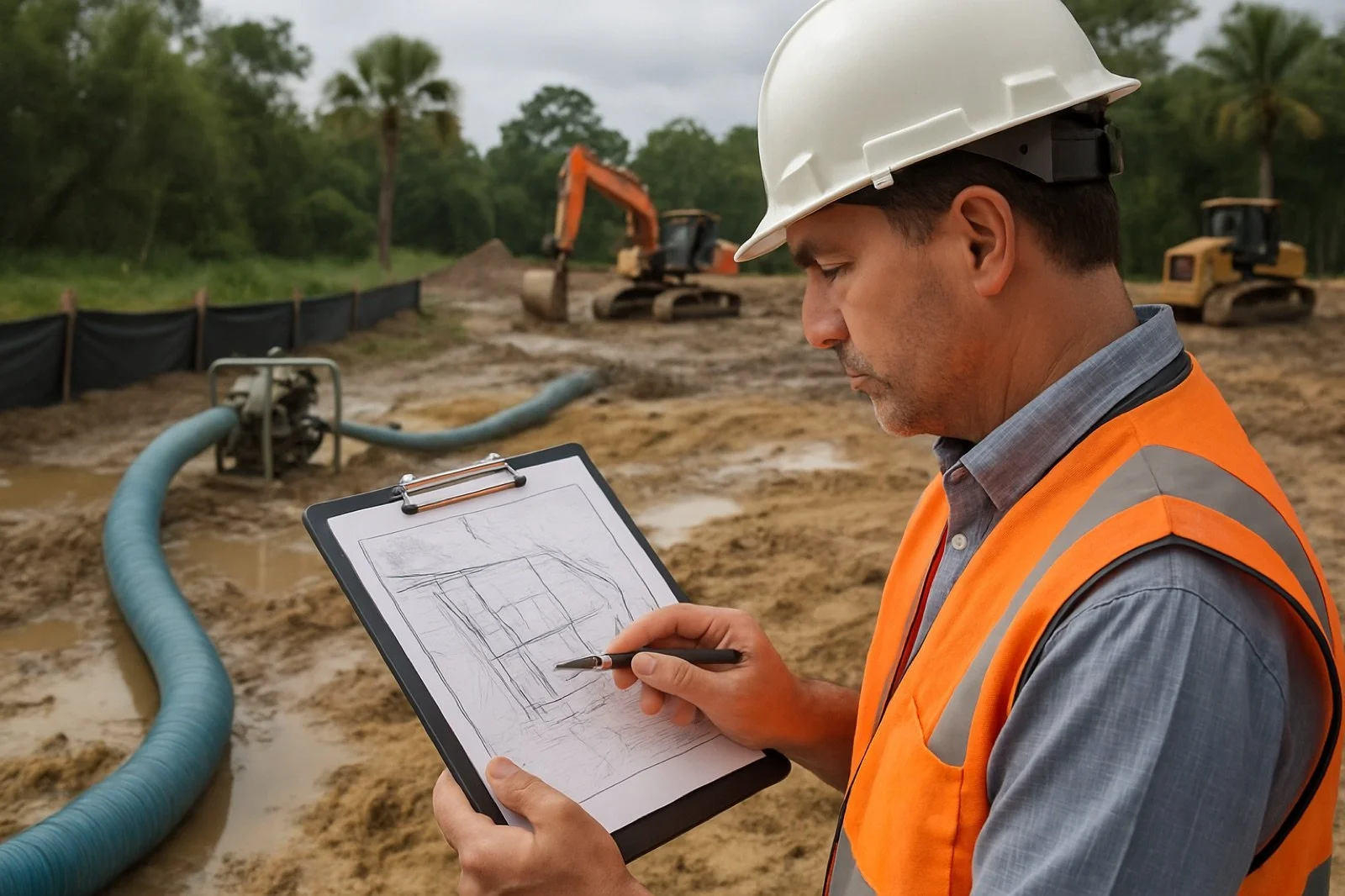
Close-up view of a construction superintendent in a hard hat reviewing a site drainage plan on a clipboard beside a temporary pump hose, silt fence, wet sandy soil, and construction equipment on a Florida jobsite after rain
Practical Ways to Handle Standing Water
Every construction site is different, but there are several proven methods for managing standing water during October construction in St. Petersburg.
1. Temporary Pumping
When water collects in excavations or low areas, pumps may be used to remove it. However, pumping must be done responsibly. Water should not simply be discharged into the street, onto a neighboring property, or into a storm drain without proper controls. Sediment must be managed, and discharge locations need to be selected carefully.
2. Regrading and Surface Shaping
Sometimes the most effective solution is reshaping the surface so water naturally flows away from work zones. Even temporary grading can make a major difference during construction. Proper slopes help prevent repeated pooling in the same areas.
3. Erosion and Sediment Controls
Silt fence, wattles, inlet protection, gravel construction entrances, and stabilized soil areas can help reduce erosion and keep sediment from leaving the site. These controls must be installed correctly and maintained after storms.
4. Material Protection
Materials should be stored off the ground whenever possible. In October, a sunny morning can turn into a wet afternoon quickly. Keeping materials covered, elevated, and away from drainage paths reduces waste and prevents delays.
5. Safe Access Routes
Crews need safe, stable pathways to move around the site. Muddy or flooded access points can slow work and increase the risk of injury. Temporary stone, mats, or adjusted access routes may be needed after heavy rain.
“BTB Development kept our project moving even after several heavy October rain days. Their team handled drainage, protected the site, and communicated clearly about what needed to happen next.”
— Local St. Petersburg property owner
Why Local Experience Matters
Construction in St. Petersburg is not the same as construction in a dry inland market. Our sites are affected by coastal weather, sandy soils, mature neighborhoods, limited lot space, existing drainage patterns, and local permitting requirements. A contractor who understands these conditions can anticipate problems before they become expensive.
BTB Development brings local knowledge to every phase of the project. We understand that standing water is not just about drying out a site. It is about protecting the schedule, protecting the investment, keeping crews safe, and respecting nearby properties.
How BTB Development Approaches Wet Site Conditions
When we manage a construction site, we focus on planning, communication, and execution. If October weather is expected to bring rain, we prepare the site before the storm arrives. After rain, we inspect conditions and make smart decisions before moving forward with sensitive work like compaction, concrete placement, framing, or finish material delivery.
Our approach includes:
Pre-construction planning: We evaluate drainage concerns early so the site is not constantly reacting to avoidable water problems.
Weather monitoring: We watch local forecasts and adjust site activities when heavy rain or tropical moisture is expected.
Clean and organized jobsites: A well-managed site makes it easier to spot drainage problems and correct them quickly.
Clear communication: We keep clients informed when weather affects the schedule and explain the practical steps being taken.
Quality control: We do not rush critical work over saturated or unstable areas just to check a box.
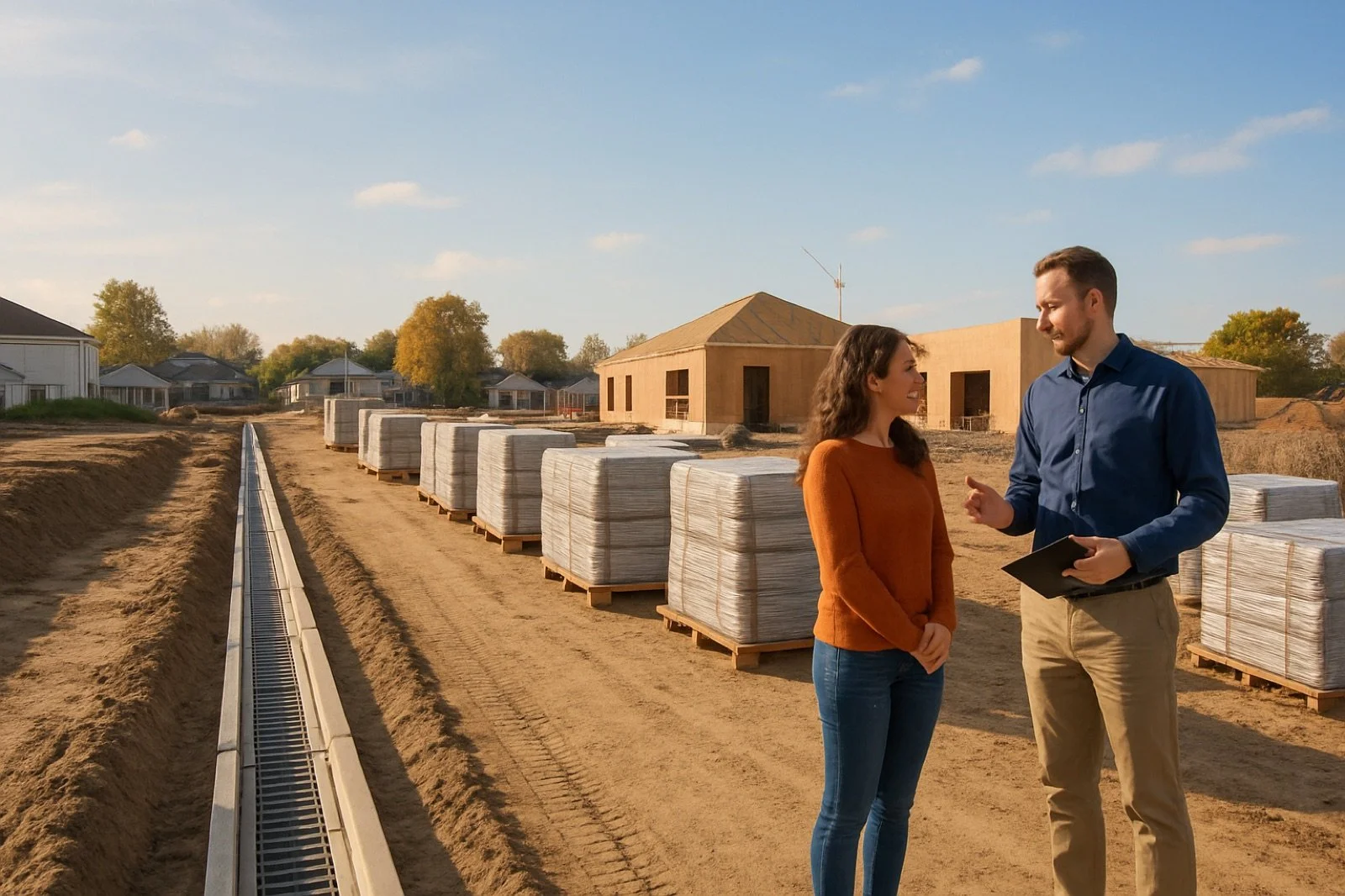
Wide-angle photograph of a clean, well-organized St. Petersburg construction site with temporary drainage channels, covered building materials elevated on pallets, compacted access paths, and a BTB Development project manager speaking with a homeowner under bright October skies
Why Choose BTB Development?
Choosing the right construction partner is about more than price. It is about trust, preparation, accountability, and the ability to solve real-world site conditions. Standing water is a perfect example. A less experienced team may wait until the site is flooded, then scramble for a quick fix. At BTB Development, we believe in anticipating the issue, protecting the work, and keeping the project moving safely.
Clients choose BTB Development because we bring:
Local St. Petersburg experience with weather, drainage, and site conditions common to our area.
Hands-on project oversight so problems are identified and addressed quickly.
Reliable communication before, during, and after weather events.
Attention to detail in site preparation, scheduling, material protection, and workmanship.
A commitment to long-term value instead of temporary shortcuts that can create future problems.
Plan Ahead Before the Next Rain
October can be one of the best months to build in St. Petersburg, but it still requires respect for Florida weather. Standing water should never be ignored. With the right planning, drainage controls, and experienced construction management, your project can stay safer, cleaner, and more efficient.
If you are preparing for a construction project in St. Petersburg, Florida, BTB Development is ready to help. From site preparation to project completion, we bring practical local knowledge and a commitment to doing the job right.
Contact BTB Development today to discuss your upcoming project and learn how we can help protect your investment from the ground up.