November in St. Petersburg, Florida is one of the best times of year to begin a demolition or site-clearing project. The intense summer heat has eased, hurricane season is winding down, and property owners are often preparing for remodels, rebuilds, additions, and outdoor improvements before the new year. But here on the Gulf Coast, November still brings its own demolition safety challenges: humidity, coastal winds, sudden rain, soft ground, salt air, and debris-control concerns.
At BTB Development, we work in these conditions every day. As a local St. Petersburg company, we understand that safe demolition is not just about knocking something down—it is about planning carefully, protecting people and property, controlling debris, and leaving the site ready for what comes next.
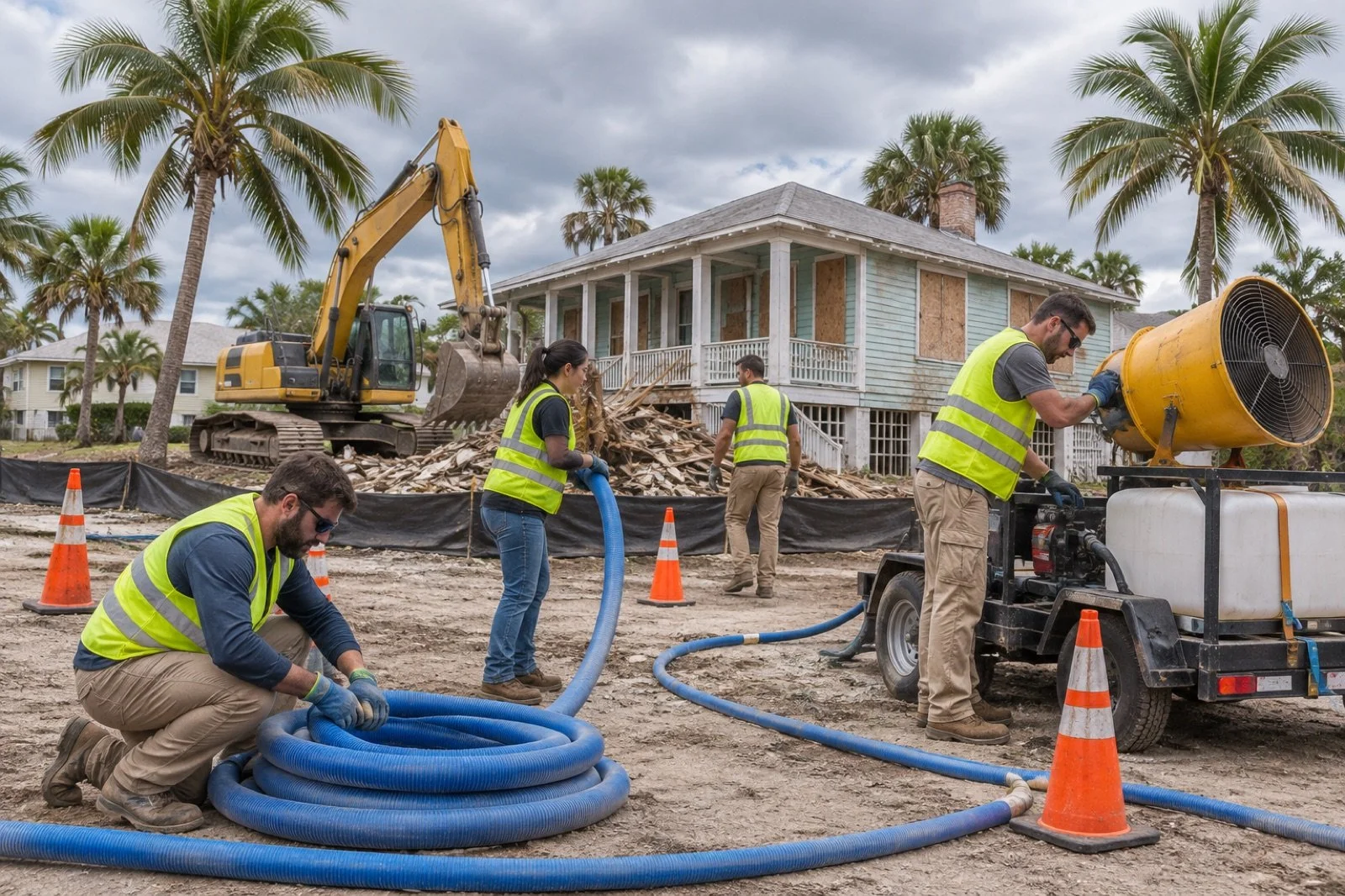
A professional demolition crew in safety vests and hard hats preparing a residential demolition site in St. Petersburg, Florida, with palm trees, a cloudy November Gulf Coast sky, safety cones, dust-control hoses, and equipment staged neatly near an older coastal home
Why November Weather Matters for Demolition in St. Petersburg
Many customers assume demolition is simpler in November because the weather is cooler than summer. While that is true, Gulf Coast conditions still require serious attention. Average November weather in St. Petersburg can include comfortable daytime temperatures, breezy afternoons, lingering humidity, and occasional rain systems moving across the bay. Even when the forecast looks calm, conditions can shift quickly near the coast.
Humidity affects visibility, dust control, worker fatigue, equipment performance, and how debris behaves once materials are disturbed. Wind affects falling debris, airborne particles, fencing, tarps, and nearby structures. A job that would be routine in dry inland conditions needs extra planning when performed near the water, in dense neighborhoods, or around older structures common throughout Pinellas County.
Key Takeaways:
Check Gulf Coast weather daily: November winds and passing rain can change demolition plans quickly in St. Petersburg.
Control dust and debris: Humidity helps in some ways, but wind can still carry particles, insulation, roofing, and light debris off site.
Protect nearby properties: Proper fencing, barriers, equipment placement, and debris handling are essential in tight coastal neighborhoods.
Hire a local demolition team: BTB Development understands St. Petersburg permitting, site conditions, and Gulf Coast safety challenges.
Safety Tip #1: Watch the Wind Before Work Begins
Wind is one of the biggest demolition safety factors in coastal Florida. In November, breezes coming off Tampa Bay or the Gulf can pick up in the afternoon. Even moderate winds can create problems when crews are removing roofing, siding, drywall, fencing, or old framing.
Before demolition begins, a responsible crew should evaluate:
Current wind speed and expected gusts throughout the day
Direction of wind in relation to neighboring homes, streets, sidewalks, and vehicles
Whether dust suppression systems need to be adjusted
How tarps, temporary fencing, and containment barriers are secured
Whether certain tasks should be delayed until calmer conditions
At BTB Development, we do not treat the forecast as a formality. We use it as part of the safety plan. If winds make a phase of demolition unsafe, it is better to adjust the schedule than to risk debris leaving the work zone or creating a hazard for neighbors.
Safety Tip #2: Control Dust in Humid Conditions
Humidity can make dust behave unpredictably. On one hand, moisture in the air can reduce some airborne dust. On the other hand, once demolition begins, dry interior materials, old insulation, concrete, plaster, tile, and wood can still release fine particles. When mixed with coastal breezes, those particles can travel beyond the immediate work area.
Dust control is especially important around:
Older homes with aging building materials
Residential neighborhoods with close property lines
Commercial properties near active businesses
Sidewalks, parking areas, and public access points
Properties near water where runoff and contamination must be managed carefully
Water misting, strategic debris handling, covered containers, and controlled dismantling all help reduce dust. A demolition company should also know when a structure needs additional inspection before work begins, especially if older materials could contain asbestos, lead-based paint, or other hazardous components.
“BTB Development took the time to explain how they would control dust and debris before the first machine arrived. Living close to my neighbors in St. Pete, that gave me a lot of confidence.”
— Local St. Petersburg homeowner
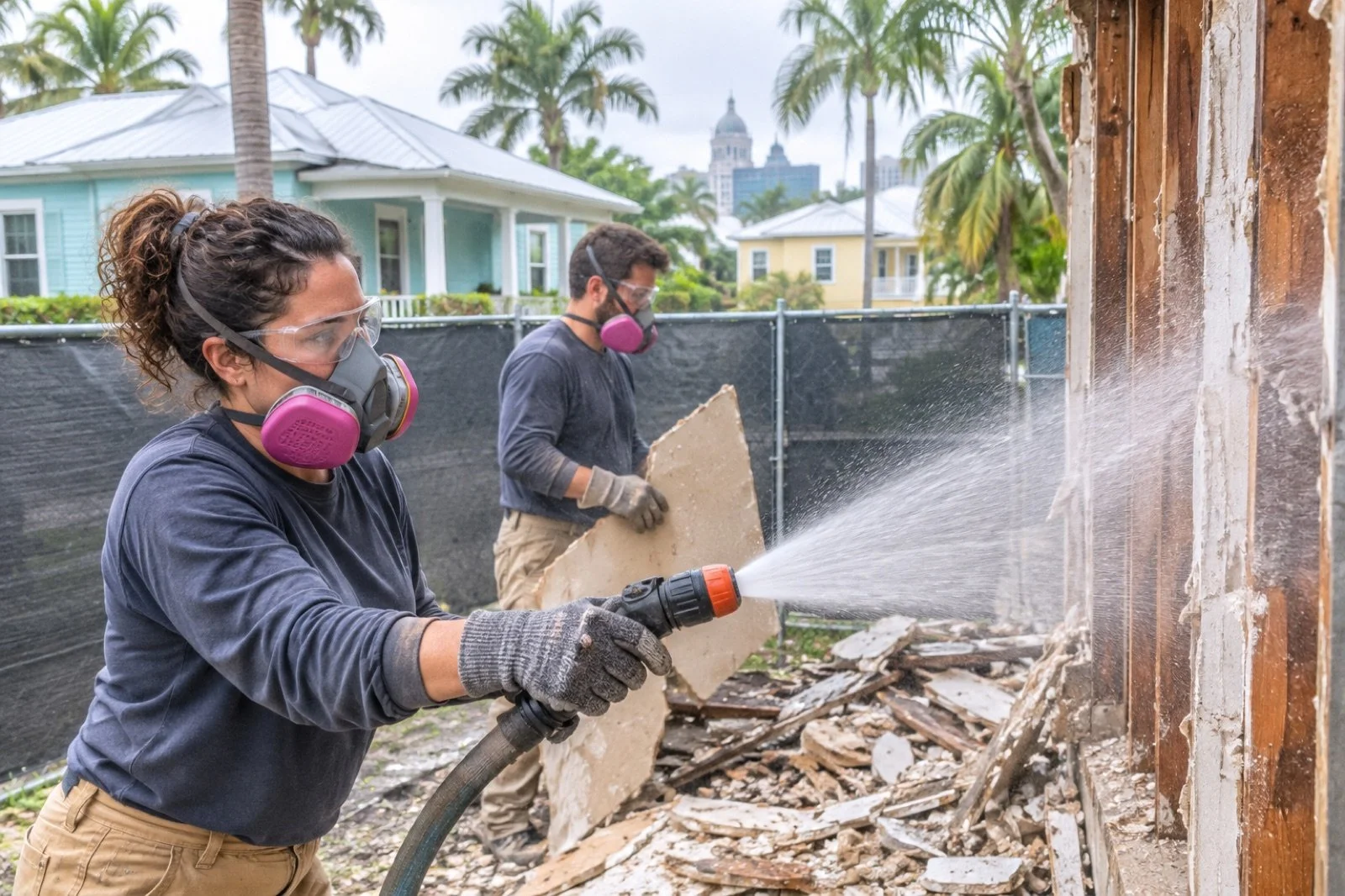
Close-up of demolition safety preparation on a humid Gulf Coast morning, showing water mist spraying near a partially dismantled wall, secured debris fencing, workers wearing respirators and gloves, and neighboring St. Petersburg homes visible in the background
Safety Tip #3: Be Careful With Soft or Wet Ground
November is usually drier than the peak summer storm season, but rain still happens. In St. Petersburg, sandy soil, low-lying lots, and previously saturated ground can affect how equipment moves on a demolition site. Heavy machinery must be placed and operated with care, especially on residential lots, alleys, waterfront properties, or areas with limited access.
Soft ground can increase the risk of equipment shifting, rutting, or damaging underground utilities. That is why site evaluation matters. Before demolition, we look at access points, drainage, elevation, soil condition, and the location of nearby structures. Safe demolition is about more than the building—it is about the entire property.
Safety Tip #4: Secure the Site Before, During, and After Demolition
A demolition site must be controlled at every stage. This is particularly important in St. Petersburg neighborhoods where pedestrians, pets, cyclists, delivery drivers, and nearby residents may be close to the work zone.
Proper site safety may include:
Temporary fencing and warning signage
Controlled access points for workers and equipment
Debris piles kept organized and away from sidewalks or neighboring property
Daily cleanup to prevent loose material from blowing away overnight
Protection around trees, landscaping, driveways, and adjacent structures
Clear communication with the property owner about project phases
Windy Gulf Coast conditions make end-of-day cleanup especially important. Loose boards, roofing pieces, plastic, insulation, and lightweight debris can become a problem if left unsecured. A professional crew should leave the site safe at the end of each workday—not just at the end of the project.
Safety Tip #5: Plan Around Utilities and Permits
One of the most important demolition safety steps happens before the visible work begins. Utilities must be properly located, disconnected, capped, or protected. This can include electric, gas, water, sewer, communications lines, irrigation systems, and drainage features.
Permitting is also a major part of safe demolition in St. Petersburg and Pinellas County. Cutting corners on permits can delay a project, create liability, and cause problems when it is time to rebuild or sell the property. BTB Development helps customers understand the process so the work is done properly from the start.
In coastal Florida, demolition may also require attention to environmental considerations, stormwater control, tree protection, and disposal rules. Hiring a local team means hiring people who understand these requirements—not someone guessing their way through them.
Safety Tip #6: Choose Selective Demolition When Needed
Not every demolition project is a full tear-down. Many November projects in St. Petersburg involve selective demolition for kitchen remodels, bathroom renovations, garage conversions, additions, damaged structures, or commercial build-outs. Selective demolition requires precision. The goal is to remove what needs to go while protecting what stays.
This is where experience makes a major difference. Removing walls, flooring, cabinets, concrete, or exterior features without damaging plumbing, electrical systems, framing, or neighboring finishes takes planning and skill. Humidity can also affect interior work by making enclosed areas feel warmer and reducing ventilation, so airflow and worker safety must be considered.
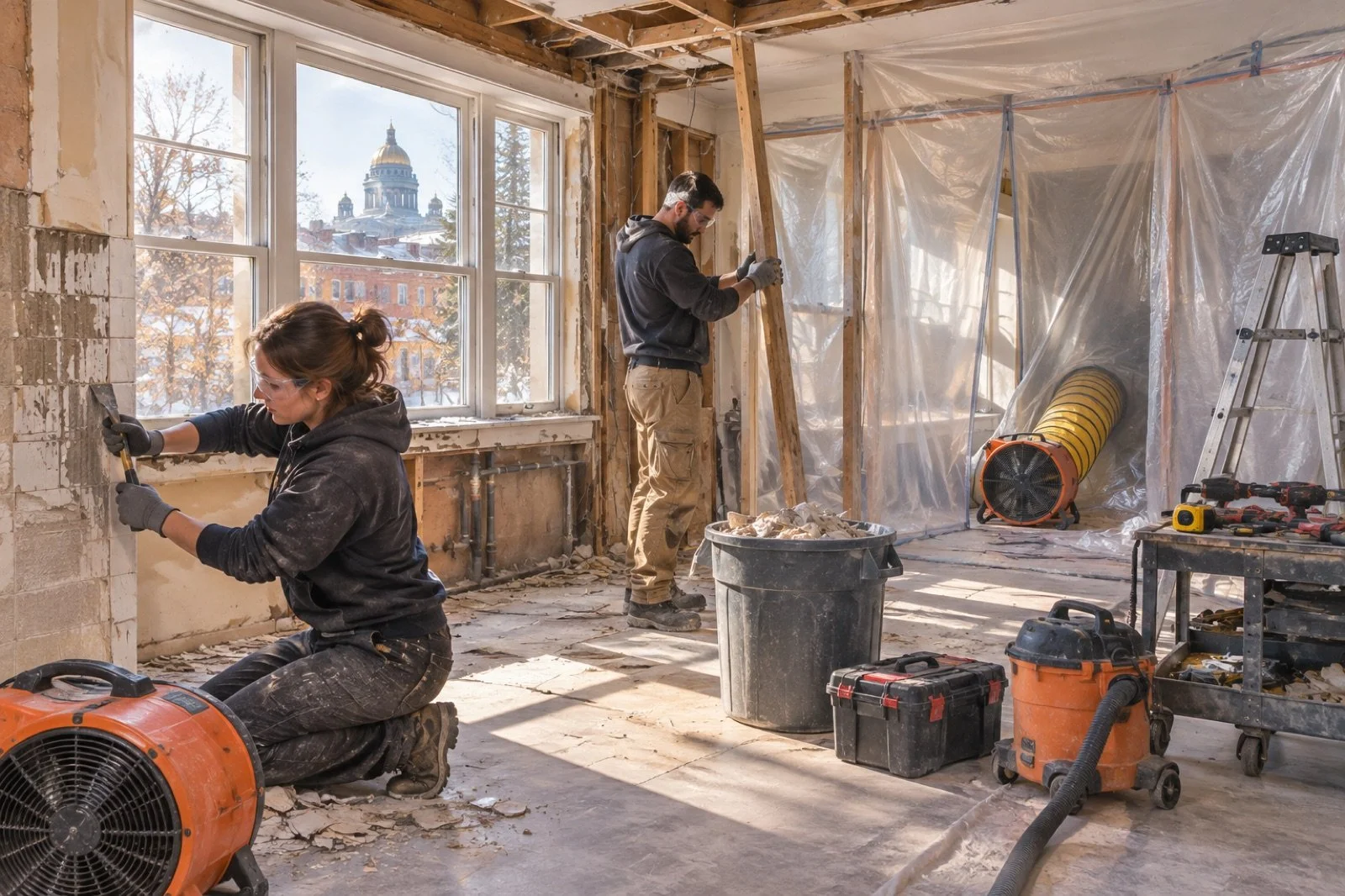
Interior selective demolition scene inside a St. Petersburg bungalow during a November renovation, with removed cabinets, exposed framing, plastic dust barriers, portable ventilation fans, organized tools, and sunlight coming through windows
Why Customers Choose BTB Development
When you hire BTB Development, you are not hiring a crew that only sees demolition as destruction. You are hiring a local development-minded team that understands the bigger picture: safety, preparation, cleanup, and the next phase of your property.
Customers choose BTB Development because we bring:
Local Gulf Coast experience: We understand St. Petersburg weather, soil, neighborhoods, permitting, and coastal construction concerns.
Safety-first planning: Every project begins with evaluating risks, access, utilities, debris control, and weather conditions.
Reliable communication: We keep customers informed before, during, and after demolition so there are no surprises.
Respect for your property: We work carefully around landscaping, driveways, neighboring homes, and remaining structures.
Clean, organized job sites: Debris control and cleanup are part of doing the job right.
Development perspective: Because we understand construction and site preparation, we help set your project up for a smoother next step.
We know that demolition can feel overwhelming for property owners. Whether you are removing an old structure, preparing for a remodel, clearing storm-damaged materials, or making room for new construction, the company you choose matters. A safe demolition project protects your investment, your neighbors, and everyone on site.
Prepare Your Property Before Demolition Day
If you are planning demolition work this November in St. Petersburg, there are a few steps you can take before the crew arrives:
Remove personal items from the work area
Discuss access needs for equipment and trucks
Notify nearby neighbors if the project may affect parking or noise
Confirm utility shutoffs and service requirements
Secure pets away from the work zone
Ask your contractor about dust, debris, and wind-control plans
A good demolition contractor will walk you through these items and answer your questions clearly. If a company cannot explain its safety plan, that is a red flag.
Ready to Start Your St. Petersburg Demolition Project?
November is a smart time to move forward with demolition in St. Petersburg, but Gulf Coast conditions still demand experience and preparation. Humidity, wind, rain, soft ground, tight neighborhoods, and coastal regulations all play a role in keeping a project safe and successful.
At BTB Development, we are proud to serve our St. Petersburg community with professional demolition and development services built on safety, communication, and local knowledge. If you are planning a residential or commercial demolition project, we would be happy to discuss your goals, evaluate your site, and help you take the next step with confidence.
Contact BTB Development today to schedule a consultation for your demolition project in St. Petersburg, Florida.