August in St. Petersburg, Florida is beautiful, but it is also one of the most demanding times of year for site preparation. Afternoon thunderstorms can arrive quickly, humidity stays high, tropical systems become a real concern, and coastal soil conditions can change from one property to the next. Whether you are preparing land for a new home, commercial buildout, addition, driveway, or utility installation, the early groundwork matters more than many property owners realize.
At BTB Development, we understand that successful construction starts before the first slab is poured or the first wall is framed. In Florida coastal zones, poor site preparation can lead to drainage problems, settlement, erosion, permitting delays, and expensive rework. The good news is that most of these problems are preventable with proper planning, local knowledge, and an experienced team.
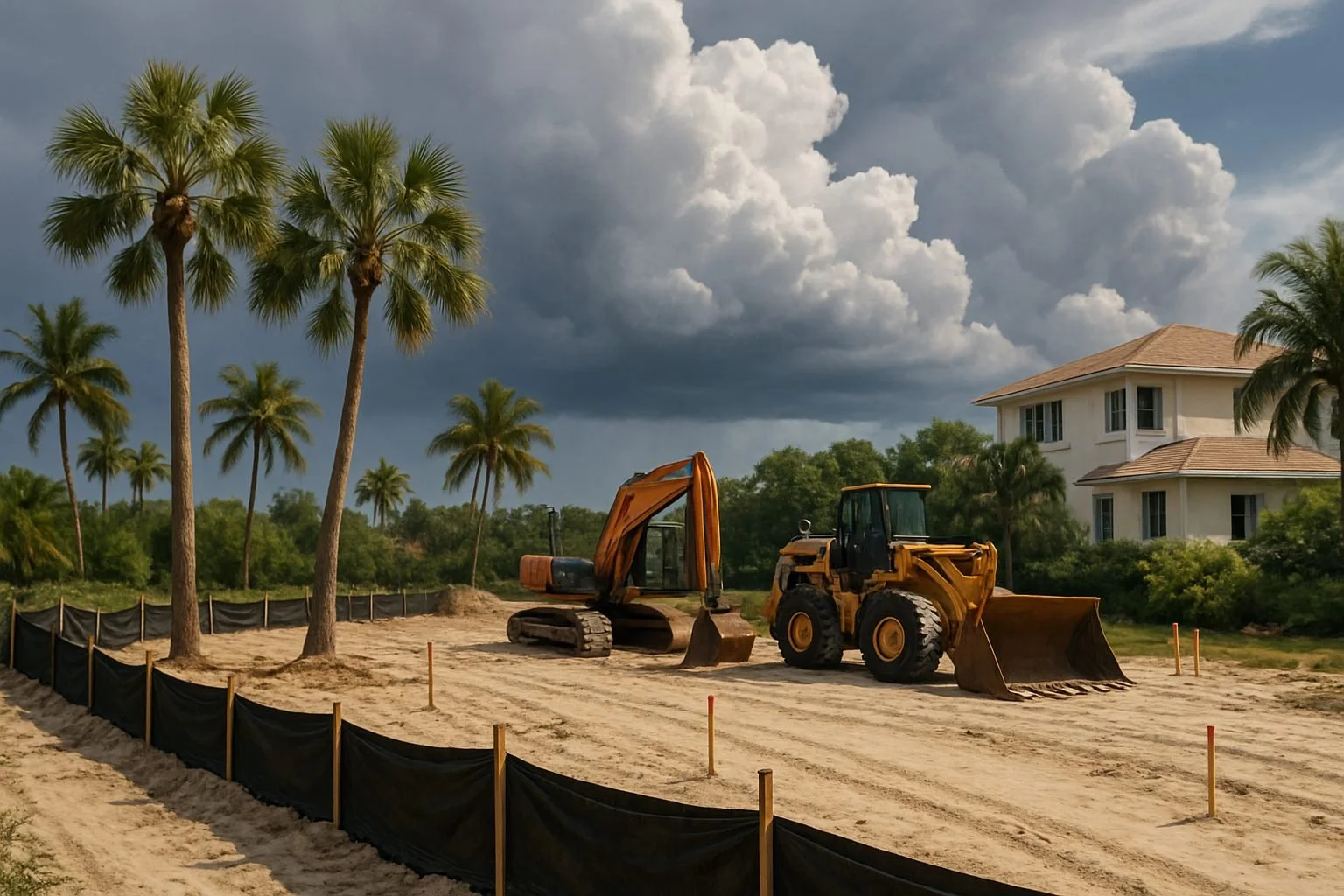
A coastal construction site in St. Petersburg Florida during August, with sandy soil, silt fencing, storm clouds building in the distance, palm trees, survey stakes, and construction equipment staged neatly near a residential lot
Why Coastal Site Preparation Is Different in St. Petersburg
Site preparation in coastal Florida is not the same as preparing land in a dry inland region. St. Petersburg properties may deal with sandy soils, high groundwater, salt air exposure, stormwater runoff rules, flood zone requirements, and strict municipal or county permitting standards. In August, those challenges become even more important because frequent heavy rains can expose weaknesses in grading, drainage, erosion control, and soil compaction.
A site that looks dry and stable in the morning can become saturated after a late-afternoon storm. A shallow swale that seems minor can become a channel for runoff. Soil that was not properly compacted can shift under weight. These are the details that separate a smooth construction project from one filled with delays.
Key Takeaways:
Plan for August rain: Drainage, erosion control, and soil stabilization should be addressed before major work begins.
Do not skip soil and elevation evaluation: Coastal properties often require extra attention to compaction, groundwater, and flood zone considerations.
Permitting matters: Mistakes with setbacks, stormwater rules, or coastal requirements can delay your project and increase costs.
Choose a local site prep team: BTB Development understands St. Petersburg’s coastal conditions and builds preparation plans around them.
Mistake #1: Ignoring Drainage Until It Becomes a Problem
One of the most common site preparation mistakes in Florida coastal zones is treating drainage as an afterthought. In August, when thunderstorms can drop heavy rain in a short period, poor drainage becomes obvious fast. Water may collect near the future foundation, wash out freshly graded areas, or push sediment toward neighboring properties and streets.
Proper drainage planning should happen early. That means understanding the slope of the land, where water naturally flows, how nearby properties are affected, and whether the site needs swales, retention areas, grading adjustments, or temporary stormwater controls.
Common drainage-related errors include:
Grading the site too flat and allowing water to sit after storms.
Directing runoff toward a neighboring property or public right-of-way.
Failing to install temporary erosion and sediment controls before clearing.
Overlooking downspout, driveway, and hardscape runoff during planning.
At BTB Development, we look at how the site will perform during real Florida weather—not just on a dry day. That practical approach helps protect your investment from the start.
Mistake #2: Underestimating Sandy and Saturated Soils
Many coastal properties around St. Petersburg have sandy soils, fill material, or areas that hold moisture below the surface. These conditions do not automatically make a site unsuitable, but they do require the right preparation. If soil is not evaluated, stabilized, and compacted correctly, the finished structure or surface may settle unevenly over time.
August weather can make this worse. Frequent rain can saturate the ground, making it harder to achieve proper compaction if the work is rushed. Heavy equipment can also rut soft areas, creating uneven subgrades that must be corrected before construction continues.
“The biggest difference we noticed with BTB Development was that they did not rush the prep work. They explained the drainage and soil concerns upfront, and that saved us from surprises later.”
— Local St. Petersburg property owner
Good site preparation may include removing unsuitable material, bringing in proper fill, compacting in controlled lifts, and coordinating with engineers or inspectors when required. Cutting corners at this stage can lead to major expenses later.
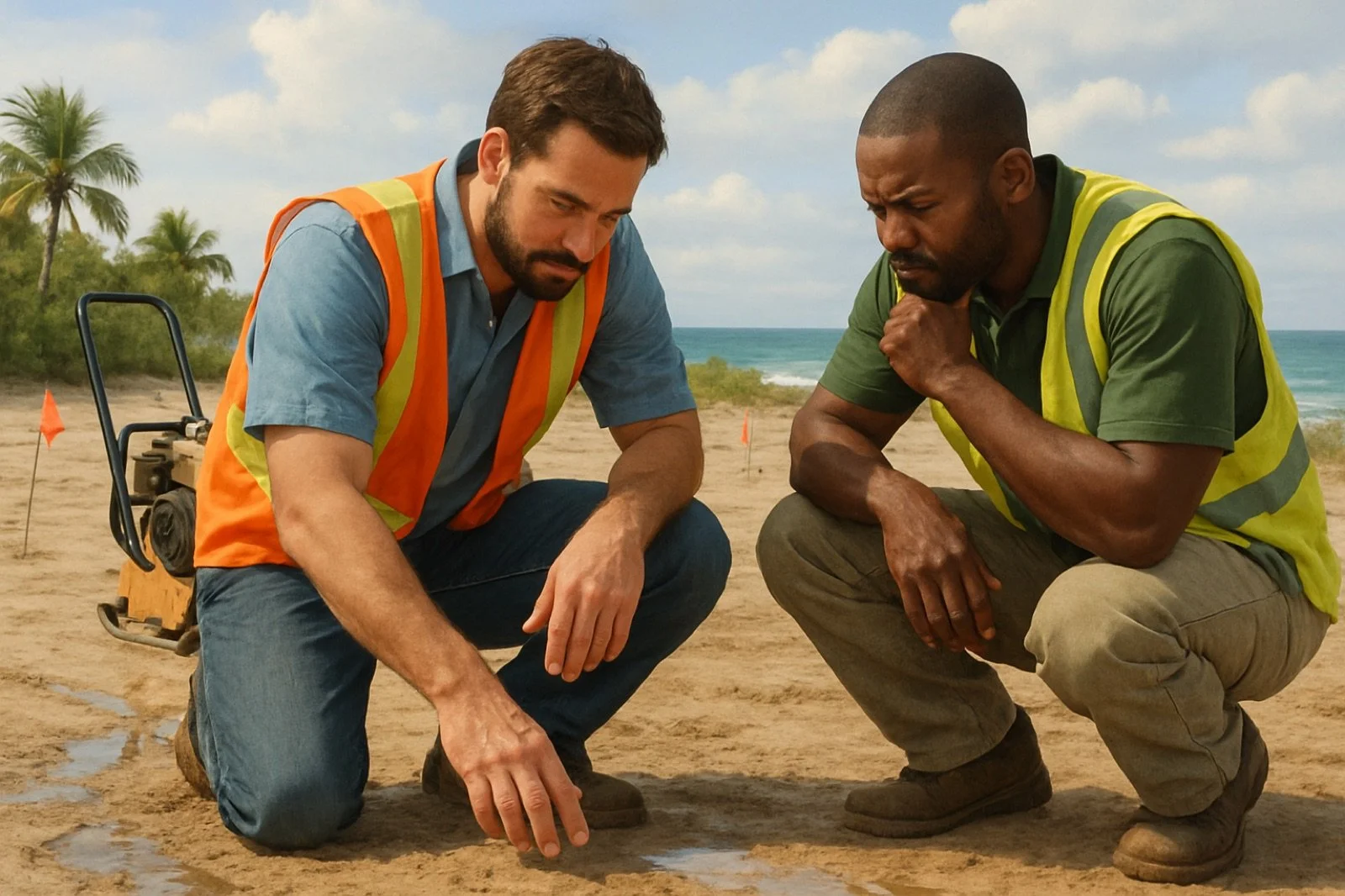
Close-up of a construction crew inspecting compacted sandy soil on a Florida coastal lot, with a plate compactor, moisture in the soil from recent rain, survey flags, and a partially cloudy August sky
Mistake #3: Clearing Too Much Vegetation Too Quickly
Clearing a site may seem simple: remove trees, brush, debris, and unwanted material. But in coastal Florida, aggressive clearing without a plan can create erosion, destabilize soil, and increase runoff. Vegetation often helps hold sandy soils in place, especially during summer storms.
Before clearing begins, property owners should consider:
Which trees or vegetation must be preserved due to local rules or project goals.
Where erosion control measures should be installed before soil is exposed.
How equipment access will be managed without damaging protected areas.
Whether clearing should be phased to reduce exposure during rainy periods.
BTB Development approaches clearing with the full project in mind. We do not just look at what needs to be removed—we look at how the cleared site will handle weather, inspections, access, and the next stages of construction.
Mistake #4: Forgetting About Permits, Setbacks, and Flood Zone Requirements
In St. Petersburg and surrounding coastal areas, site preparation is often connected to permitting, zoning, environmental standards, and floodplain requirements. Even if the physical work seems straightforward, the paperwork and approvals can affect your schedule.
Some property owners make the mistake of assuming that because a lot has been developed before, new work can begin immediately. But coastal regulations, elevation requirements, stormwater rules, and local codes can change. If setbacks, easements, tree protections, or flood zone considerations are missed, work may have to stop until issues are corrected.
BTB Development helps clients think through these details early. While every project is unique, our local experience allows us to identify common red flags before they become costly delays.
Mistake #5: Poor Construction Access Planning During Rainy Season
August weather in St. Petersburg can make jobsite access difficult. A site may be dry enough for a pickup truck but not ready for dump trucks, excavation equipment, concrete vehicles, or material deliveries. Without stable access routes, vehicles can sink, rut the soil, track sediment onto roads, or damage areas that were already prepared.
Access planning is an important part of site preparation. It may involve temporary rock entrances, designated staging areas, stabilized drive paths, or scheduling deliveries around weather windows. This is especially important on tight coastal lots where space is limited and neighboring properties are close.
A well-prepared site supports a safer, cleaner, and more efficient build. It also helps reduce frustration for owners, crews, inspectors, and neighbors.
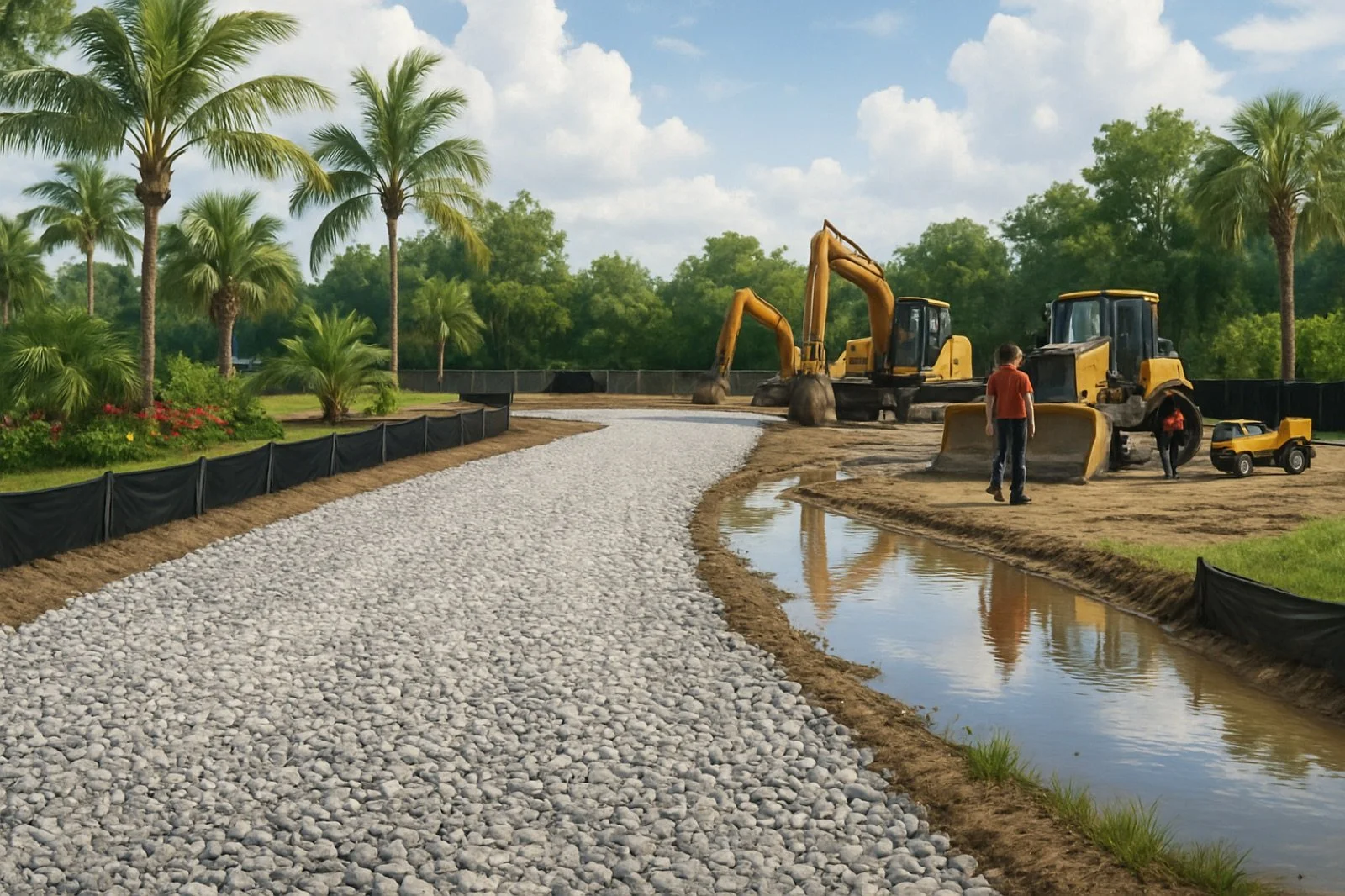
A well-organized St. Petersburg Florida coastal jobsite after a summer rain, showing a stabilized gravel construction entrance, erosion control barriers, clean equipment staging, puddles managed away from the building pad, and tropical landscaping nearby
Mistake #6: Hiring a Contractor Without Local Coastal Experience
Site preparation is not just dirt work. In coastal Florida, it is a combination of practical field experience, weather awareness, grading knowledge, equipment skill, and local construction understanding. A contractor who does not regularly work in this environment may miss important details that are obvious to a local team.
When choosing a site preparation contractor in St. Petersburg, look for a company that understands:
How August rain affects scheduling, grading, and soil conditions.
How to manage erosion and sediment control near streets, drains, and neighboring lots.
Why compaction, elevation, and drainage must be handled correctly from the beginning.
How coastal conditions influence construction planning and long-term performance.
Why Choose BTB Development?
At BTB Development, we take pride in helping property owners, builders, and developers start their projects the right way. We are based in St. Petersburg, Florida, and we understand the conditions that shape construction in our coastal community. From summer storms and sandy soils to drainage challenges and permitting concerns, we know what it takes to prepare a site properly.
Our approach is straightforward: we evaluate the site, identify potential challenges, communicate clearly, and complete the work with attention to detail. We believe that a prepared site is more than a cleared lot—it is the foundation for everything that comes next.
Customers choose BTB Development because we offer:
Local knowledge: We understand St. Petersburg’s coastal environment and August weather patterns.
Practical planning: We think ahead about access, drainage, soil stability, and project sequencing.
Clear communication: We help clients understand what needs to happen and why.
Quality-focused work: We know that doing site preparation correctly helps prevent costly problems later.
Start Your Project With Confidence
If you are planning a construction project in St. Petersburg or a nearby Florida coastal area, do not let site preparation become an afterthought. August weather can reveal drainage, erosion, access, and soil problems quickly—but with the right team, those risks can be managed before they disrupt your project.
BTB Development is ready to help you prepare your property with the local expertise and careful planning your project deserves. Contact us today to discuss your site preparation needs and learn how we can help you build on a stronger foundation.